Imagine having the power to see the invisible. That’s precisely what a drone with an infrared camera offers. It’s a game-changing technology that extends our vision beyond the visible spectrum, revealing a world of heat signatures that are otherwise hidden. For professionals in fields from public safety to agriculture, this capability isn’t just an advantage; it’s a revolution. As a drone expert with over 15 years in the field, I’ve witnessed firsthand how thermal drones transform complex challenges into manageable tasks. This guide will walk you through everything you need to know about this incredible technology.
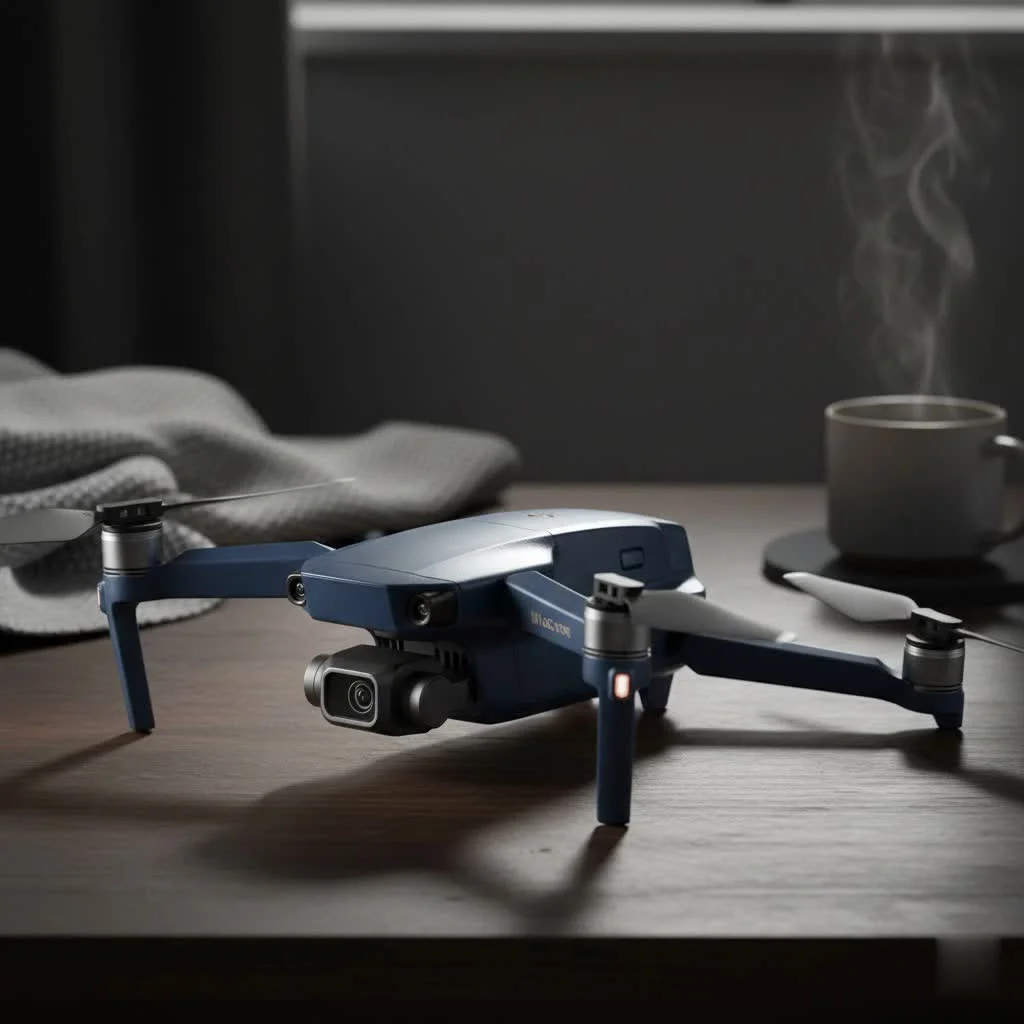
How Do Drones with Infrared Cameras Actually Work?
At its core, a thermal or infrared camera detects infrared radiation—or heat—emitted by all objects with a temperature above absolute zero. Unlike a standard camera that captures reflected light, a thermal camera creates an image based on differences in temperature. This is why you can see a warm body signature in complete darkness.
A drone provides the perfect aerial platform for this technology. By mounting an infrared camera on a drone, you can quickly survey large areas from a unique vantage point, identifying heat anomalies that would be impossible to spot from the ground. The camera’s sensor, known as a microbolometer, reacts to infrared energy and translates it into an electronic signal, which is then processed into a visual image called a thermogram. Different colors on the thermogram represent different temperatures, allowing operators to interpret the scene with incredible accuracy.
Key Factors in Thermal Imaging
To get the most out of your thermal drone, it’s crucial to understand two concepts: emissivity and reflectivity.
- Emissivity: This is a measure of how efficiently an object radiates heat. Dark, matte surfaces have high emissivity, while shiny, reflective surfaces have low emissivity.
- Reflectivity: Objects with low emissivity, like a pane of glass or polished metal, will reflect the thermal energy from their surroundings. An inexperienced operator might misinterpret these reflections as hot spots on the object itself.
Understanding these properties is vital for accurate data interpretation. For example, a skilled thermographer knows that a low-emissivity roof might reflect the heat of the sun, requiring an adjustment in their analysis to avoid a false reading.
Top Applications for Drones with Infrared Cameras
The versatility of a drone with an infrared camera has unlocked new efficiencies and safety protocols across numerous industries. These aerial platforms provide critical data that saves time, money, and, most importantly, lives.
Public Safety: Search & Rescue and Firefighting
|
Our Picks for the Best Drone in 2026
As an Amazon Associate I earn from qualifying purchases.
|
||
| Num | Product | Action |
|---|---|---|
| 1 | DJI Mini 3 (DJI RC), Lightweight 3x Mechanical Gimbal Drones with Camera for Adults 4K, 38-min Flight Time, up to 32800ft (10km) Video Transmission, Vertical Shooting, GPS Auto Return Integrated |

|
| 2 | DJI Mini 3 Fly More Combo (DJI RC), Drones with Camera for Adults 4K, 3 Batteries for 114-min Flight Time, Vertical Shooting, 32800ft (10km) Video Transmission, Lightweight Mini Drone for Beginners |
|
| 3 | Drone with Camera 1080P HD FPV Foldable Drone for Adults and Beginners, RC Quadcopter with Gravity Control, One Key Take Off/Land, Optical Flow Positioning, 360° Flip, 3 Speed Mode, Waypoint Fly Grey |
|
| 4 | DJI Neo, Mini Drone with 4K UHD Camera for Adults, 135g Self Flying Drone that Follows You, Palm Takeoff, Subject Tracking, QuickShots, Stabilized Video, Built-In Propeller Guard (Controller-Free) |
|
| 5 | Drone with Camera - Drones for Adults, with 2 Batteries, Carrying Case, Propellers, 1080P HD Foldable Drone with Stable Hover, Trajectory Flight, Gravity Control, One Key Take Off/Land, 3D Flip |
|
| 6 | Drone with Camera for Adults, 2K HD FPV Drones with Upgrade Altitude Hold, One-Key Take Off/Landing, Speed Adjustment, Headless Mode, 2 Batteries, Toys Gifts for Teen Boys Girls, Beginner |
|
| 7 | Drone with 1080P Camera for Beginners and Adults, Foldable Remote Control Quadcopter with Voice Control, Gestures Selfie, Altitude Hold, One Key Start, 3D Flips, 2 Batteries, Toy for Beginners |
|
| 8 | LỖI |
|
| 9 | DJI Mini 5 Pro Fly More Combo with DJI RC 2, Drone with Camera, 1-Inch CMOS, 4K Drone for Beginners with Omnidirectional Obstacle Sensing, ActiveTrack 360°, 225° Gimbal Rotation, 3 Batteries |
|
| 10 | DJI Neo Three-Battery Combo, Mini Drone with 4K UHD Camera for Adults, 135g Self Flying Drone that Follows You, Palm Takeoff, Subject Tracking, QuickShots, Stabilized Video (Controller-Free) |
|
In emergency services, time is the most critical factor. Thermal drones are invaluable tools for locating missing persons, especially at night or in dense foliage. A person’s body heat stands out clearly against a cooler background, allowing search teams to cover vast areas far more quickly than ground crews. For firefighters, these drones can see through smoke to identify hot spots, locate trapped individuals, and assess the structural integrity of a burning building, all while keeping personnel out of harm’s way.
Industrial Inspections: Energy and Construction
Inspecting infrastructure like power lines, solar farms, and commercial roofs is traditionally a dangerous and time-consuming job. A drone with an infrared camera can perform these tasks in a fraction of the time with zero risk to human life.
- Solar Farms: A thermal drone can quickly identify malfunctioning or underperforming solar cells, which appear hotter than the surrounding panels.
- Power Lines: Overheated components on transmission towers are a clear sign of a potential failure. Drones can detect these issues before they lead to outages.
- Roofing: Water intrusion under a roof membrane can be detected by its different thermal signature, allowing for targeted repairs before major damage occurs.
“The ROI on using a thermal drone for commercial roof inspections is undeniable,” notes veteran building inspector, Marcus Thorne. “We can survey a massive warehouse roof in under an hour and give the client a detailed report on moisture damage that would have taken a team of four an entire day to find manually.”
Precision Agriculture
Thermal drones are revolutionizing how farmers manage their crops. By flying over a field, a drone can identify areas of water stress, pest infestation, or disease. These problem areas often have a different temperature profile than healthy plants. This data allows farmers to apply water, pesticides, or fertilizer with surgical precision, reducing waste and increasing yields.
Wildlife Monitoring and Conservation
Ecologists and conservationists use thermal drones to conduct animal censuses, monitor nesting habits, and track poachers—all without disturbing the animals. The ability to operate at night, when many species are most active, provides an unprecedented look into their natural behaviors and helps protect endangered populations.
How to Choose the Right Drone with an Infrared Camera
Selecting the right thermal drone depends entirely on your specific needs and budget. The market offers a wide range of options, from all-in-one integrated systems to customizable platforms where you choose the camera payload.
Key Specifications to Consider
When comparing models, pay close attention to these three specifications, as they will determine the quality and utility of your thermal data:
- Thermal Resolution: Measured in pixels (e.g., 320×256 or 640×512), this is the most important factor. Higher resolution means a clearer image and the ability to detect smaller temperature differences from farther away. For serious industrial inspections, 640×512 is the professional standard.
- Thermal Sensitivity (NETD): This measures the smallest temperature difference the camera can detect, expressed in millikelvins (mK). A lower number is better. A sensitivity of <50mK is good for most applications.
- Lens and Field of View (FOV): The lens determines how wide of an area you can see. A wider FOV is great for covering large areas like a farm, while a narrower FOV is better for detailed inspections from a distance, like a cell tower.
Popular Models on the Market
While the market is constantly evolving, some popular and reliable models include:
- DJI Matrice 30T: A powerful, integrated solution with both thermal and visual sensors, popular in public safety.
- Autel EVO II Dual 640T: Known for its high-resolution 640T thermal sensor in a compact, foldable frame.
- Parrot Anafi Thermal: A more budget-friendly option for entry-level thermography and general inspections.
Flying Safely and Legally
Operating a drone with an infrared camera comes with responsibilities. In the United States, you must adhere to Federal Aviation Administration (FAA) regulations. For commercial operations, you will need a Part 107 Remote Pilot Certificate. Always be aware of your surroundings, respect privacy, and avoid flying over people or in restricted airspace.
Pre-Flight Checklist for Thermal Operations
Before every flight, run through a quick checklist to ensure a successful mission:
- Check Weather: Avoid rain, high winds, and extreme temperatures. Overcast conditions are often ideal for thermal imaging as they reduce solar reflection.
- Calibrate Camera: Allow the thermal camera to warm up and perform a non-uniformity correction (NUC) to ensure an even image.
- Set Emissivity: Adjust the camera’s emissivity settings based on the primary material you are inspecting.
- Secure Airspace: Ensure you are cleared to fly in the area and have a designated takeoff/landing zone.
- Mission Plan: Have a clear flight plan to cover the target area efficiently.
Frequently Asked Questions (FAQ)
What is the main advantage of a drone with an infrared camera?
The main advantage is the ability to capture data beyond the visible spectrum. This allows operators to see temperature differences, making it possible to find missing people in the dark, identify failing equipment, or spot moisture damage that is invisible to the naked eye.
Can thermal drones see through walls?
No, this is a common misconception. A thermal drone cannot see through solid objects like walls. It can, however, detect heat signatures on the surface of the wall that might indicate something warm on the other side, such as the location of studs or a water leak.
How much does a professional thermal drone cost?
The cost varies widely. Entry-level models can start around $2,000 to $3,000, while high-resolution systems for professional industrial inspections or public safety can range from $10,000 to over $30,000.
Do I need a special license to fly a drone with an infrared camera?
In the US, if you are flying for any purpose other than pure recreation, you need an FAA Part 107 certificate. The type of camera on the drone does not change this requirement. Additional training in thermography is also highly recommended.
What’s the difference between thermal and night vision?
Night vision technology amplifies small amounts of visible light to see in the dark. Thermal imaging, on the other hand, requires no light at all because it detects heat signatures. A thermal camera can work in absolute darkness, whereas a night vision camera cannot.
The Future is Seen in Infrared
The drone with an infrared camera is more than just a flying gadget; it is a powerful tool for data collection that enhances safety, improves efficiency, and provides critical insights across dozens of industries. From saving lives on a search and rescue mission to protecting vital infrastructure, the applications are vast and growing. As the technology becomes more accessible and powerful, it will continue to unlock possibilities we are only just beginning to imagine.
Get our weekly buyer guide
Practical specs, not advice. Unsubscribe anytime.
I was looking into thermal drones for agricultural surveying, specifically for crop health monitoring. While the information about how they work was very informative, I found that the guide didn’t go into enough depth about specific software integrations for analyzing the thermal data. It’s a crucial part of the workflow for me, and I wish there was more detail on that aspect. The drone itself is great, but the data processing is key.
As someone in public safety, the ability to ‘see the invisible’ with these drones is absolutely critical. We’ve used them for search and rescue operations, and the thermal imaging makes a huge difference in locating individuals in challenging conditions. Understanding the core mechanics of how they detect heat has really helped me explain their value to my team. Highly recommend this tech for any professional use.
I recently got into drone photography and was curious about infrared capabilities for some unique shots. The explanation of how these drones work, capturing infrared radiation instead of reflected light, was super helpful. My only minor complaint is that some of the higher-end models mentioned are a bit out of my current budget, but it gives me something to save up for. Still, great info!
I’ve been using drones for property inspections for years, and the section on how thermal cameras detect heat signatures really resonated with me. It’s incredible how much more detail you can get compared to just visual inspections. This technology has saved me so much time identifying insulation issues and potential leaks that would be impossible to spot otherwise. Definitely a game changer for my business.