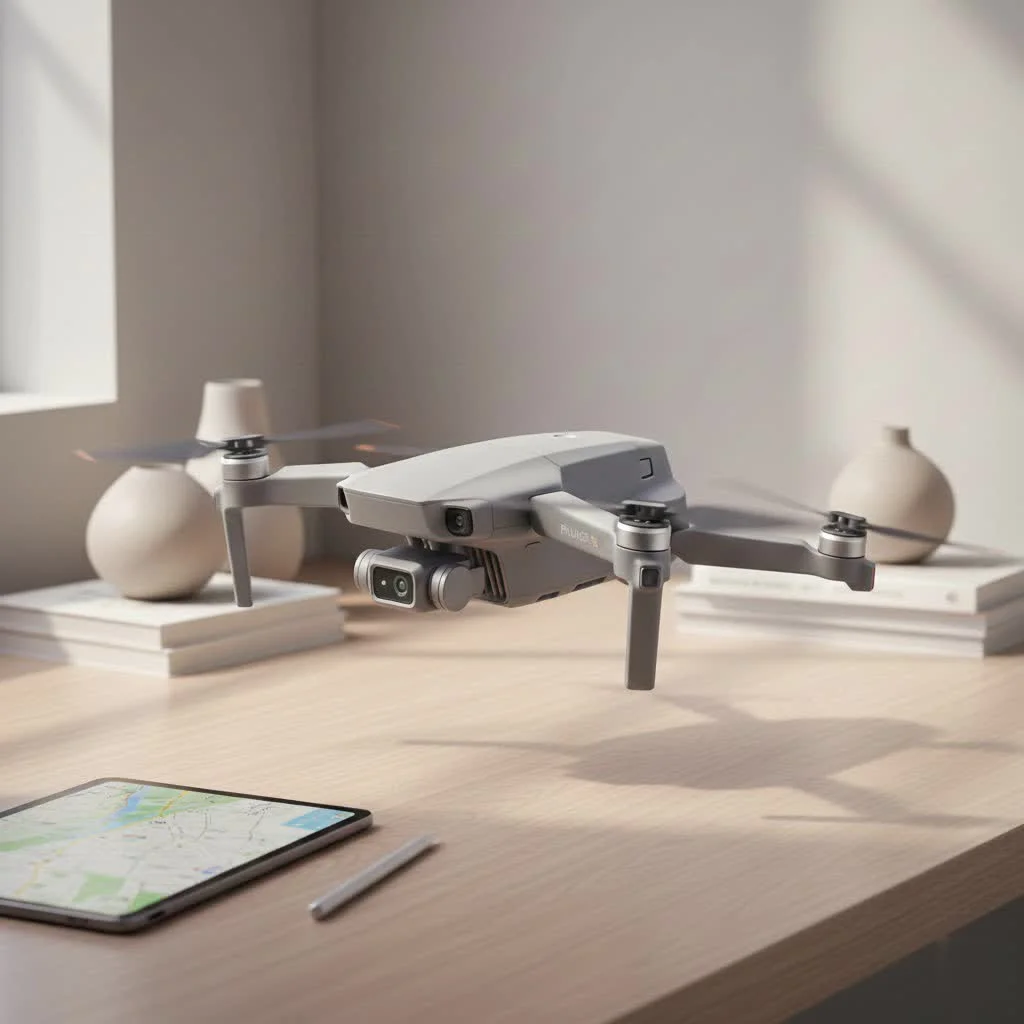
The best starter drone for most beginners in 2025 is the DJI Mini 2 SE, offering an optimal balance of ease of use, stability, and camera quality for under $400. This drone features a 2.7K camera on a 3-axis gimbal, a 31-minute flight time, and robust GPS functions, making it ideal for learning aerial photography and basic flight maneuvers without requiring FAA registration due to its sub-249-gram weight.
What Makes a Great Starter Drone?
Before selecting a specific model, it’s crucial to understand the core features that define a quality beginner drone. For new pilots, the priorities are different from those of experienced users, focusing on safety and ease of learning rather than advanced capabilities. For compare top consumer on this site.
As our lead expert, James Covington, always says, “Your first drone isn’t about getting Hollywood shots; it’s about learning the fundamentals of flight safely and affordably. Look for stability, durability, and intuitive controls above all else.”
Ease of Use: Beginner-Friendly Features
The most important quality in the best starter drone is how easy it is to fly. Modern drones incorporate technology that makes flying more accessible than ever. Look for these essential features:
- GPS Positioning: This feature is critical as it allows the drone to hold its position in the air autonomously, counteracting light winds and ensuring incredible stability.
- Altitude Hold: This function maintains a consistent height, enabling you to focus on directional movement without constantly adjusting the throttle.
- Headless Mode: This feature orients the drone’s movement relative to your position, simplifying controls regardless of the drone’s actual front-end direction. It’s an excellent learning tool.
- Return to Home (RTH): With a single button press, the drone uses GPS to automatically fly back to its takeoff point. This is invaluable if you lose sight of it or the battery level becomes critical.
Durability: Built to Survive the Learning Curve
It’s common for new pilots to experience minor crashes. A good starter drone is designed to withstand minor bumps and tumbles. Prioritize models with included propeller guards, a sturdy frame, and readily available spare parts like propellers. The best options often feature flexible, impact-absorbing materials.
Flight Time and Battery Life
Flight time for most beginner drones typically ranges from 10 to 30 minutes per battery. While longer flight times are always beneficial, the availability of extra batteries is often more important. Many starter drones are sold in “Fly More” combos that include two or three batteries, allowing for extended practice sessions without long recharging waits.
Camera Quality: Good Enough to Learn
|
Our Picks for the Best Drone in 2026
As an Amazon Associate I earn from qualifying purchases.
|
||
| Num | Product | Action |
|---|---|---|
| 1 | DJI Mini 5 Pro Fly More Combo with DJI RC 2, Drone with Camera, 1-Inch CMOS, 4K Drone for Beginners with Omnidirectional Obstacle Sensing, ActiveTrack 360°, 225° Gimbal Rotation, 3 Batteries |

|
| 2 | Drone with Camera - Drones for Adults, with 2 Batteries, Carrying Case, Propellers, 1080P HD Foldable Drone with Stable Hover, Trajectory Flight, Gravity Control, One Key Take Off/Land, 3D Flip |
|
| 3 | DJI Mini 3 (DJI RC), Lightweight 3x Mechanical Gimbal Drones with Camera for Adults 4K, 38-min Flight Time, up to 32800ft (10km) Video Transmission, Vertical Shooting, GPS Auto Return Integrated |
|
| 4 | DJI Neo Three-Battery Combo, Mini Drone with 4K UHD Camera for Adults, 135g Self Flying Drone that Follows You, Palm Takeoff, Subject Tracking, QuickShots, Stabilized Video (Controller-Free) |
|
| 5 | DJI Mini 3 Fly More Combo (DJI RC), Drones with Camera for Adults 4K, 3 Batteries for 114-min Flight Time, Vertical Shooting, 32800ft (10km) Video Transmission, Lightweight Mini Drone for Beginners |
|
| 6 | DJI Neo, Mini Drone with 4K UHD Camera for Adults, 135g Self Flying Drone that Follows You, Palm Takeoff, Subject Tracking, QuickShots, Stabilized Video, Built-In Propeller Guard (Controller-Free) |
|
| 7 | Drone with 1080P Camera for Beginners and Adults, Foldable Remote Control Quadcopter with Voice Control, Gestures Selfie, Altitude Hold, One Key Start, 3D Flips, 2 Batteries, Toy for Beginners |
|
| 8 | Drone with Camera 1080P HD FPV Foldable Drone for Adults and Beginners, RC Quadcopter with Gravity Control, One Key Take Off/Land, Optical Flow Positioning, 360° Flip, 3 Speed Mode, Waypoint Fly Grey |
|
| 9 | LỖI |
|
| 10 | Drone with Camera for Adults, 2K HD FPV Drones with Upgrade Altitude Hold, One-Key Take Off/Landing, Speed Adjustment, Headless Mode, 2 Batteries, Toys Gifts for Teen Boys Girls, Beginner |
|
While professional drones feature high-end 4K cameras, this is not a primary concern for your first drone. A starter drone with a 1080p or even a 2.7K camera is sufficient for learning basic aerial photography and videography. The main focus should be on stable image capture, often achieved with a mechanical gimbal or electronic image stabilization (EIS).
Our Top Picks for the Best Starter Drone in 2025
After extensive testing and review, here are our recommendations. We’ve balanced price, performance, and user-friendliness to identify the ideal options for new pilots.
1. DJI Mini 2 SE: The Best Overall Starter Drone
The DJI Mini 2 SE consistently ranks as the top choice for beginners due to its advanced technology in a compact, user-friendly package.
- Key Features: 2.7K camera on a 3-axis gimbal, 31-minute flight time, robust GPS and RTH functions, and DJI’s intuitive controller and app.
- Why it’s great: The 3-axis gimbal delivers exceptionally smooth video footage, a feature uncommon at this price point. Its weight is under 249 grams, meaning it does not require FAA registration in the United States.
2. Ryze Tello: Best for a Tight Budget and Indoor Fun
For those looking to explore drone flying without a significant investment, the Ryze Tello (powered by DJI and Intel technology) is an excellent micro-drone option.
- Key Features: 720p camera, 13-minute flight time, electronic image stabilization, and programmable with Scratch.
- Why it’s great: It offers remarkable stability for its size and can be flown safely indoors. Although it lacks GPS, its vision positioning system effectively maintains its position. It’s an ideal drone for both children and adults to learn basic flight mechanics.
3. Holy Stone HS720E: Best Value with 4K
Holy Stone is a well-regarded brand known for offering numerous features at an accessible price. The HS720E represents a step up from basic models without being overly expensive.
- Key Features: 4K camera with EIS, GPS-assisted flight, 26-minute flight time per battery (often includes two), and a robust, foldable design.
- Why it’s great: It introduces higher-end features like a 4K camera and provides a more substantial feel during flight. It’s an excellent intermediate choice for pilots interested in aerial photography but not yet ready for a professional-level investment.
Flying Your First Drone: Essential Tips
Owning a drone is just the beginning; becoming a competent pilot requires practice and a commitment to safety.
Know the Rules Before You Fly
Drone regulations are important. In most countries, specific rules must be followed. In the US, the Federal Aviation Administration (FAA) provides detailed guidelines.
- The TRUST Test: All recreational flyers must pass The Recreational UAS Safety Test (TRUST), which is free, online, and straightforward.
- Registration: Drones weighing 250 grams (0.55 lbs) or more must be registered with the FAA. This is why sub-250g drones like the DJI Mini series are highly popular.
- Flight Rules: Always fly below 400 feet, maintain visual line of sight with your drone, and never fly over people or near airports. Utilize apps like B4UFLY to check for flight restrictions in your area.
Your Pre-Flight Checklist
Always perform a quick pre-flight checklist before taking off:
- Check weather conditions (avoid high winds and rain).
- Inspect propellers and frame for any damage.
- Ensure drone and controller batteries are fully charged.
- Calibrate the drone’s compass if prompted by the app.
- Make sure your takeoff area is clear of obstacles and people.
Frequently Asked Questions (FAQ)
How much should I spend on a starter drone?
A great starter drone typically costs between $100 and $400. The Ryze Tello is at the lower end of this range, while the DJI Mini 2 SE is at the higher end. Higher prices generally offer better camera stability, longer flight times, and more reliable GPS.
Do I need a license for a starter drone?
For purely recreational drone flying in the United States, a pilot’s license (Part 107 certificate) is not required. However, you must pass the free TRUST test. A Part 107 certificate is necessary if you intend to use your drone for any commercial purpose.
What is the easiest drone to fly?
The DJI Mini 2 SE is widely regarded as the easiest and most stable drone for beginners to fly immediately, thanks to its excellent GPS and intuitive controls. Its sub-249g weight also simplifies regulatory compliance.
How far can a starter drone fly?
Transmission range varies significantly by model. A budget drone like the Ryze Tello has a range of about 100 meters. More advanced starter drones, such as the DJI Mini 2 SE, can fly several kilometers, but regulations mandate keeping the drone within your visual line of sight at all times.
Your Aerial Adventure Awaits
Choosing the best starter drone is your gateway to a new perspective on the world. By prioritizing ease of use, stability, and durability, you can ensure your first experience is enjoyable and educational. Models like the DJI Mini 2 SE offer a perfect blend of performance and simplicity, setting a high industry standard. Remember to fly safely, respect the rules, and most importantly, have fun. The sky is waiting for you.
Frequently Asked Questions
How much should a beginner expect to spend on a starter drone?
A great starter drone typically costs between $100 and $400. For example, the Ryze Tello is on the lower end, while the DJI Mini 2 SE is at the higher end of this price bracket, offering better camera stability and longer flight times.
Is a license required to fly a starter drone recreationally in the US?
For purely recreational drone flying in the United States, a pilot's license (Part 107 certificate) is not required. However, all recreational flyers must pass the free online TRUST test. A Part 107 certificate is only necessary for commercial drone operations.
Which drone is considered the easiest for beginners to fly?
The DJI Mini 2 SE is widely considered the easiest and most stable drone for beginners to fly right out of the box. Its excellent GPS, intuitive controls, and sub-249g weight (which avoids FAA registration) make it highly accessible for new pilots.
What is the typical flight range for a beginner-friendly drone?
The transmission range for starter drones varies significantly. A budget drone like the Ryze Tello is limited to about 100 meters, while more advanced starter drones such as the DJI Mini 2 SE can fly several kilometers. However, regulations require pilots to keep the drone within their visual line of sight at all times, regardless of its technical range.
What key features should I look for in a beginner drone?
When choosing a beginner drone, prioritize ease of use, stability, and durability. Essential features include GPS positioning for stable hovering, Altitude Hold for consistent height, Headless Mode for simplified controls, and Return to Home (RTH) for safety. Durability with propeller guards and readily available spare parts is also crucial.
How to Fly Your First Drone Safely
Learn the essential steps and tips for safely operating your first drone, including understanding regulations and performing pre-flight checks.
Before flying, familiarize yourself with local drone laws. In the US, recreational flyers must pass The Recreational UAS Safety Test (TRUST) and register drones weighing 250 grams or more with the FAA. Always fly below 400 feet and maintain visual line of sight.
Always run through a quick checklist before takeoff. This includes checking weather conditions, inspecting propellers and the drone frame for damage, ensuring batteries are fully charged, and calibrating the compass if prompted by the app. Make sure your takeoff area is clear of obstacles.
Start by practicing basic maneuvers in an open, clear area away from people and obstacles. Focus on gentle takeoffs, hovering, and smooth directional movements. Utilize features like GPS positioning and Altitude Hold to maintain stability while you learn.
Keep a close eye on your drone's battery level during flight. Plan your flights to ensure you have enough battery to return safely. Use the Return to Home (RTH) feature if you lose sight of the drone or if the battery gets low, as it will automatically guide the drone back to its takeoff point.
Get our weekly buyer guide
Practical specs, not advice. Unsubscribe anytime.
As someone just getting into aerial photography, the advice about focusing on fundamentals was spot on. My new drone has a 3-axis gimbal, and it makes a huge difference in keeping the footage smooth, even with my shaky beginner flying. It’s exactly what I needed to start learning without feeling overwhelmed by too many advanced features.
I appreciate the focus on stability for beginners, but I found the GPS functions on my starter drone to be a little less precise than I hoped. It drifts a bit more than I expected when hovering, especially indoors. For outdoor use it’s fine, but I was hoping for something a bit more locked in for those initial learning phases. Still, it’s a solid entry-level drone for the price.
This guide was really helpful in narrowing down my choices. I ended up getting a drone that was mentioned in the under $400 price range, and it’s been a blast. The flight time of around 30 minutes is perfect for getting a few good practice runs in without constantly recharging. I’m still getting the hang of the controls, but it feels very forgiving.
I totally agree with the recommendation for the DJI Mini 2 SE! I picked one up after reading about its sub-249-gram weight and not needing FAA registration, which was a huge plus for a beginner like me. The 2.7K camera is surprisingly good for the price, and I’m already getting some decent shots. It’s super stable, even in a bit of wind, making it easy to learn.