The landscape of modern farming is changing, and it’s happening from the sky down. For generations, we’ve relied on ground machinery and a good eye to manage our fields, but today, a new tool is revolutionizing the way we operate. The agriculture drone, a purpose-built unmanned aerial vehicle (UAV), is no longer a futuristic concept but a practical, powerful asset for farmers looking to boost efficiency, increase yields, and practice more sustainable agriculture. These aren’t your typical hobbyist drones; they are robust machines designed to carry heavy payloads, navigate complex terrain with incredible precision, and provide data that was once impossible to gather. Here at RVSWS, we’ve spent over a decade with our boots on the ground and our eyes in the sky, and we’re here to give you the complete picture of how this technology can transform your farm.
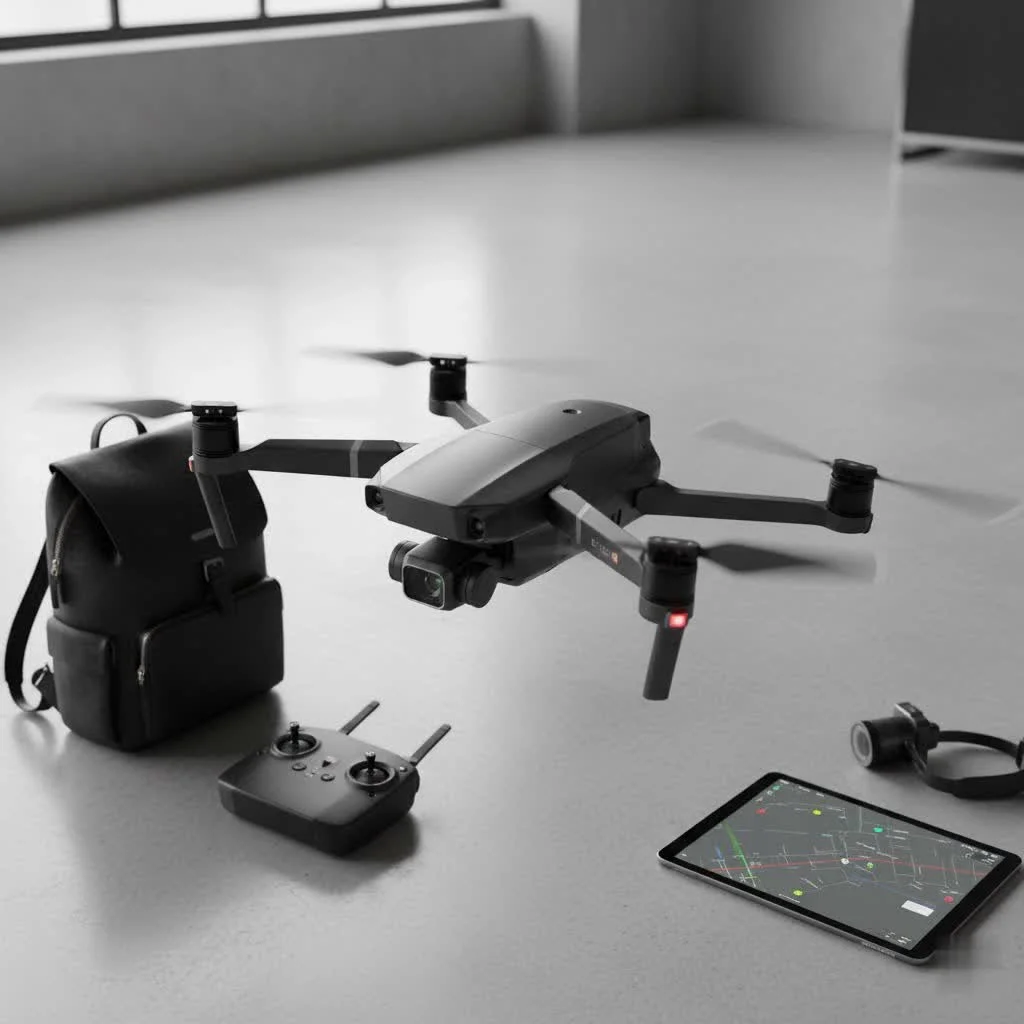
How Do Agriculture Drones Revolutionize Farming?
At its core, an agriculture drone is a multi-tool that gives farmers a bird’s-eye view and the ability to act on that information with surgical precision. It’s about working smarter, not harder. By leveraging advanced sensors and automated systems, these drones provide actionable insights that lead to better decision-making throughout the crop cycle. For explore our consumer reviews on this site.
Precision Spraying and Seeding
One of the most impactful applications is precision spraying. Drones equipped with large tanks can apply fertilizers, pesticides, and herbicides exactly where they are needed.
“Forget blanket spraying,” notes Dr. Alistair Finch, a leading agronomist in ag-tech. “With an agriculture drone, you can target a specific patch of weeds or a section of the crop showing nutrient deficiency. This drastically cuts down on chemical usage, which is a win for both the environment and your budget.”
This targeted approach minimizes chemical runoff and reduces soil compaction caused by heavy ground-based sprayers. The same principle applies to seeding, where drones can distribute seeds for cover crops or pasture in areas inaccessible to traditional tractors, like steep hillsides or waterlogged fields.
Advanced Crop Monitoring and Health Analysis
How do you know what’s really happening in the middle of a 100-acre cornfield? A drone knows. Outfitted with specialized cameras and sensors, such as multispectral or thermal imagers, an agriculture drone can see what the human eye cannot.
- Multispectral Sensors: These sensors capture data from different light spectrums to create health maps, often using indicators like the Normalized Difference Vegetation Index (NDVI). An NDVI map can reveal stressed plants long before they show visible signs of disease or drought.
- Thermal Cameras: These can detect variations in crop temperature, which is often an early sign of irrigation problems or disease.
- High-Resolution RGB Cameras: Used for creating detailed 3D maps of your fields, counting plants, and assessing storm damage.
Efficient Irrigation Management
|
Our Picks for the Best Drone in 2026
As an Amazon Associate I earn from qualifying purchases.
|
||
| Num | Product | Action |
|---|---|---|
| 1 | DJI Mini 3 Fly More Combo (DJI RC), Drones with Camera for Adults 4K, 3 Batteries for 114-min Flight Time, Vertical Shooting, 32800ft (10km) Video Transmission, Lightweight Mini Drone for Beginners |

|
| 2 | DJI Mini 3 (DJI RC), Lightweight 3x Mechanical Gimbal Drones with Camera for Adults 4K, 38-min Flight Time, up to 32800ft (10km) Video Transmission, Vertical Shooting, GPS Auto Return Integrated |
|
| 3 | DJI Mini 5 Pro Fly More Combo with DJI RC 2, Drone with Camera, 1-Inch CMOS, 4K Drone for Beginners with Omnidirectional Obstacle Sensing, ActiveTrack 360°, 225° Gimbal Rotation, 3 Batteries |
|
| 4 | DJI Neo, Mini Drone with 4K UHD Camera for Adults, 135g Self Flying Drone that Follows You, Palm Takeoff, Subject Tracking, QuickShots, Stabilized Video, Built-In Propeller Guard (Controller-Free) |
|
| 5 | DJI Neo Three-Battery Combo, Mini Drone with 4K UHD Camera for Adults, 135g Self Flying Drone that Follows You, Palm Takeoff, Subject Tracking, QuickShots, Stabilized Video (Controller-Free) |
|
| 6 | Drone with Camera for Adults, 2K HD FPV Drones with Upgrade Altitude Hold, One-Key Take Off/Landing, Speed Adjustment, Headless Mode, 2 Batteries, Toys Gifts for Teen Boys Girls, Beginner |
|
| 7 | Drone with Camera 1080P HD FPV Foldable Drone for Adults and Beginners, RC Quadcopter with Gravity Control, One Key Take Off/Land, Optical Flow Positioning, 360° Flip, 3 Speed Mode, Waypoint Fly Grey |
|
| 8 | Drone with 1080P Camera for Beginners and Adults, Foldable Remote Control Quadcopter with Voice Control, Gestures Selfie, Altitude Hold, One Key Start, 3D Flips, 2 Batteries, Toy for Beginners |
|
| 9 | LỖI |
|
| 10 | Drone with Camera - Drones for Adults, with 2 Batteries, Carrying Case, Propellers, 1080P HD Foldable Drone with Stable Hover, Trajectory Flight, Gravity Control, One Key Take Off/Land, 3D Flip |
|
Water is a precious resource. Drones help you manage it more effectively. By identifying dry patches or areas with water-logging, drones allow farmers to fine-tune their irrigation schedules and systems, ensuring every drop is used efficiently and crops receive the optimal amount of hydration.
Choosing the Right Agriculture Drone for Your Farm
Selecting the right drone depends entirely on your specific needs. A large-scale grain operation will have different requirements than a specialty vineyard. Here’s what to look for when considering adding an agriculture drone to your fleet.
Key Features to Consider
- Payload Capacity: How much can the drone carry? For spraying, this determines the size of the tank and how many acres you can cover per flight.
- Flight Time: Longer flight times mean less time spent swapping batteries and more time in the air. Look for drones that offer at least 20-30 minutes of operational flight time under load.
- Sensors and Cameras: Ensure the drone is compatible with the sensors you need, whether it’s for simple visual scouting or complex multispectral analysis.
- Autonomy and Software: The best agriculture drones operate on sophisticated flight-planning software. You should be able to draw a flight path on a map, set parameters like altitude and speed, and let the drone execute the mission autonomously. Look for features like terrain-following radar to ensure even application over varied elevations.
Fixed-Wing vs. Multirotor: Which is Best?
The two main types of agriculture drones each have distinct advantages.
| Feature | Multirotor Drone (e.g., Quadcopter) | Fixed-Wing Drone |
|---|---|---|
| Flight Mechanics | Hovers like a helicopter. | Flies forward like an airplane. |
| Best For | Spraying, spot-treatment, detailed inspection of smaller areas, and complex terrain. | Large-scale mapping and surveying of vast, open fields. |
| Agility | Highly maneuverable; can take off and land vertically. | Less maneuverable; requires a runway or catapult for launch. |
| Flight Time | Generally shorter (15-30 minutes). | Generally longer (45+ minutes). |
| Payload | Can carry heavy liquid payloads for spraying. | Typically carries lighter sensor payloads. |
For most hands-on applications like spraying and targeted scouting, a multirotor drone is the more versatile choice. For pure data collection over thousands of acres, a fixed-wing model can be more efficient.
Getting Started: A Pre-Flight Checklist for Agriculture Drones
Operating an agriculture drone safely and legally is paramount. Before you ever take off, you need a solid plan. In the United States, commercial drone operations fall under the FAA’s Part 107 rules, which require the operator to be a certified pilot.
Here is a basic pre-flight checklist to ensure every mission is safe and successful:
- [ ] Legal & Documentation:
- Confirm your FAA Part 107 certification is current.
- Ensure the drone is registered with the FAA.
- Check for any local airspace restrictions or temporary flight restrictions (TFRs).
- [ ] Weather Conditions:
- Check wind speed and direction (ensure it’s within the drone’s operational limits).
- Look for any signs of impending rain or storms.
- Assess visibility.
- [ ] Hardware & Equipment:
- Inspect propellers for any cracks or damage.
- Check that all batteries (drone and controller) are fully charged.
- Ensure the payload (sprayer tank, sensor) is securely attached and calibrated.
- Verify the GPS has a strong lock.
- [ ] Mission Plan:
- Upload the correct automated flight plan for the target field.
- Walk the perimeter to identify any new obstacles (e.g., parked vehicles, new power lines).
- Set your return-to-home (RTH) altitude to clear all obstacles.
Frequently Asked Questions (FAQ)
How much does an agriculture drone cost?
The cost of an agriculture drone varies widely based on its capabilities. A basic scouting drone might cost a few thousand dollars, while a high-capacity spraying drone from a leading brand like DJI can range from $15,000 to over $30,000, including batteries, chargers, and sensors.
Do I need a license to fly an agriculture drone?
Yes. In the United States, if you are using a drone for any purpose other than recreation, you must have an FAA Part 107 Remote Pilot Certificate. The process involves passing a knowledge test and registering your drone.
What is the return on investment (ROI) for an agriculture drone?
The ROI depends on the farm’s scale and how the drone is used. For spraying, farmers often see a return within 1-2 seasons through reduced chemical costs, lower application fees, and improved crop health. For monitoring, the ROI comes from catching problems early and optimizing inputs, leading to higher yields.
How high can an agriculture drone fly?
FAA regulations limit commercial drone flight to 400 feet above ground level. For most agricultural applications, especially spraying, drones fly much lower—typically 10 to 30 feet above the crop canopy—to ensure precise application and minimize drift.
Can drones operate in windy conditions?
Professional agriculture drones are designed to be stable in moderate winds, but there are limits. Most manufacturers specify a maximum wind resistance. Spraying in high winds is never recommended due to the risk of chemical drift, which can damage neighboring fields and is environmentally irresponsible.
The Future is Now
The agriculture drone is more than just a piece of high-tech equipment; it’s a partner in sustainable and profitable farming. It empowers you to be more precise, more efficient, and more knowledgeable about your own land. From targeted pest control to optimizing water use, drones are helping farmers grow more with less. As technology continues to advance with AI-powered analysis and drone swarm capabilities, the sky is truly the limit. If you’re ready to take your farming operation to the next level, it’s time to look up.
Get our weekly buyer guide
Practical specs, not advice. Unsubscribe anytime.
I was really hoping to use an agriculture drone for detailed terrain mapping, but the initial setup and calibration process was a bit more complex than I anticipated. While the data quality is good once it’s flying, getting it to that point took a lot of trial and error. It’s a powerful asset, but be prepared for a learning curve if you’re not already familiar with drone tech.
I’ve been using drones for crop scouting for about a year now, and the difference is incredible. The post mentioned how they help with early detection of issues, and it’s so true. I caught a pest infestation on a small section of my cornfield way before it would have been visible from the ground, saving a huge portion of my yield. Definitely a game-changer for precision agriculture.
This technology is truly transforming how we manage our farm. The ability to carry heavy payloads for things like targeted spraying, as highlighted in the guide, has made our operations so much more efficient. It’s not just about saving time; it’s about making smarter decisions based on real-time, accurate data. Highly recommend any farmer look into integrating these UAVs.
We invested in an agriculture drone primarily for variable rate application, and it’s been pretty solid. The precision navigation really does cut down on waste, which was a big selling point for us. My only minor complaint is the battery life on our model; sometimes it feels like we’re swapping them out more often than I’d like for larger fields. Still, the data it provides is invaluable.