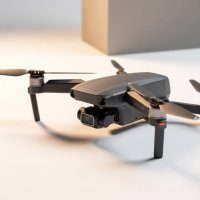
Ever found yourself wishing for a drone that could take off and land anywhere like a quadcopter, but also fly for miles with the efficiency of an airplane? That’s the magic of a VTOL drone. These incredible machines represent a huge leap forward in unmanned aerial vehicle (UAV) technology, combining the best of both worlds to unlock new capabilities for professionals and hobbyists alike. As someone who’s been in the drone industry for over 15 years, I’ve seen technologies come and go, but the rise of VTOL is one of the most exciting developments yet.
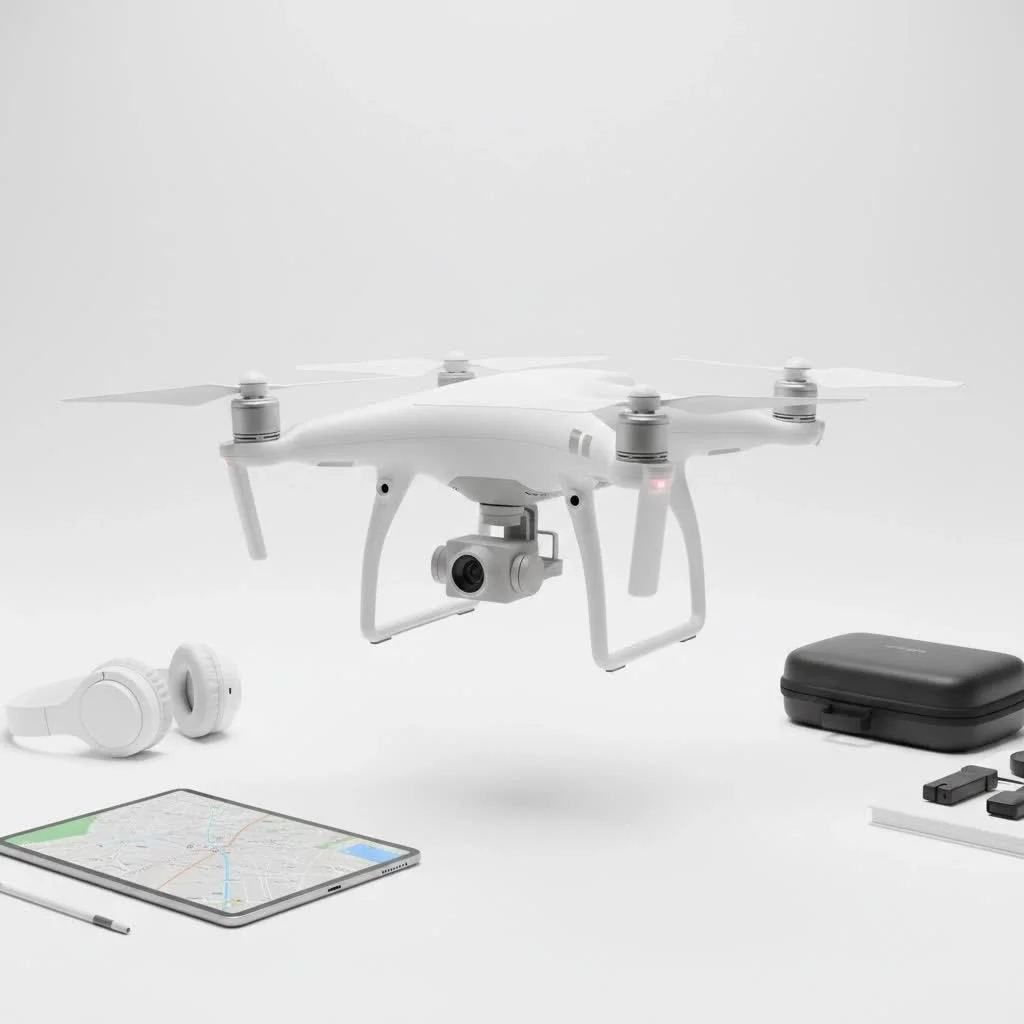
At RVSWS, we believe in demystifying complex technology. So, let’s break down exactly what a VTOL drone is, how it works, and why it might be the perfect solution for your aerial needs. This is the ultimate guide to Vertical Takeoff and Landing drones, designed to give you a clear and comprehensive understanding of this game-changing tech. For best consumer roundups on this site.
What Exactly is a VTOL Drone?
A VTOL drone is an aircraft that can take off, hover, and land vertically, like a traditional multirotor drone, but can also transition to efficient, wing-borne forward flight, like a fixed-wing airplane. The acronym VTOL stands for “Vertical Takeoff and Landing.” This hybrid capability eliminates the need for a runway, which is the biggest limitation of conventional fixed-wing drones.
Think of it this way:
- Multirotor drones (like a DJI Phantom or Mavic) are fantastic for hovering, precise maneuvering, and operating in tight spaces. However, they use a lot of energy to stay airborne, which limits their flight time and range.
- Fixed-wing drones are incredibly efficient once they’re in the air. They use their wings to generate lift, allowing them to cover vast distances and stay aloft for hours. Their major drawback is that they need a long runway or a catapult launcher to get airborne and a net or open space for a belly landing.
A VTOL drone bridges this gap, offering the operational flexibility of a helicopter with the endurance and speed of an airplane.
The Genius Behind VTOL Drone Technology
The core innovation of a VTOL drone lies in its ability to transition between two distinct flight modes: powered vertical lift and aerodynamic forward flight. This is the most complex phase of their operation and is where different designs showcase their unique engineering solutions.
Combining Multirotor and Fixed-Wing Advantages
The primary goal is to use high-power vertical lift motors for takeoff and landing and then switch to a more efficient propulsion system for cruising. During takeoff, the drone operates like a standard quadcopter. Once it reaches a safe altitude, it begins the transition process. This involves tilting its rotors, engaging a separate forward-facing propeller, or a combination of both, to generate forward thrust. As the drone picks up speed, its wings begin to generate aerodynamic lift. Once enough lift is created by the wings, the vertical lift motors can be powered down, and the drone flies just like an airplane.
The Critical Transition Phase
|
Our Picks for the Best Drone in 2026
As an Amazon Associate I earn from qualifying purchases.
|
||
| Num | Product | Action |
|---|---|---|
| 1 | Drone with Camera 1080P HD FPV Foldable Drone for Adults and Beginners, RC Quadcopter with Gravity Control, One Key Take Off/Land, Optical Flow Positioning, 360° Flip, 3 Speed Mode, Waypoint Fly Grey |

|
| 2 | DJI Mini 3 Fly More Combo (DJI RC), Drones with Camera for Adults 4K, 3 Batteries for 114-min Flight Time, Vertical Shooting, 32800ft (10km) Video Transmission, Lightweight Mini Drone for Beginners |
|
| 3 | Drone with Camera for Adults, 2K HD FPV Drones with Upgrade Altitude Hold, One-Key Take Off/Landing, Speed Adjustment, Headless Mode, 2 Batteries, Toys Gifts for Teen Boys Girls, Beginner |
|
| 4 | DJI Mini 5 Pro Fly More Combo with DJI RC 2, Drone with Camera, 1-Inch CMOS, 4K Drone for Beginners with Omnidirectional Obstacle Sensing, ActiveTrack 360°, 225° Gimbal Rotation, 3 Batteries |
|
| 5 | DJI Neo, Mini Drone with 4K UHD Camera for Adults, 135g Self Flying Drone that Follows You, Palm Takeoff, Subject Tracking, QuickShots, Stabilized Video, Built-In Propeller Guard (Controller-Free) |
|
| 6 | LỖI |
|
| 7 | Drone with 1080P Camera for Beginners and Adults, Foldable Remote Control Quadcopter with Voice Control, Gestures Selfie, Altitude Hold, One Key Start, 3D Flips, 2 Batteries, Toy for Beginners |
|
| 8 | DJI Mini 3 (DJI RC), Lightweight 3x Mechanical Gimbal Drones with Camera for Adults 4K, 38-min Flight Time, up to 32800ft (10km) Video Transmission, Vertical Shooting, GPS Auto Return Integrated |
|
| 9 | DJI Neo Three-Battery Combo, Mini Drone with 4K UHD Camera for Adults, 135g Self Flying Drone that Follows You, Palm Takeoff, Subject Tracking, QuickShots, Stabilized Video (Controller-Free) |
|
| 10 | Drone with Camera - Drones for Adults, with 2 Batteries, Carrying Case, Propellers, 1080P HD Foldable Drone with Stable Hover, Trajectory Flight, Gravity Control, One Key Take Off/Land, 3D Flip |
|
This transition from vertical to forward flight is a marvel of modern flight control systems. Sophisticated software and sensors manage the shift in aerodynamics and power distribution, ensuring the aircraft remains stable. The process is reversed for landing, as the drone slows down, re-engages its vertical lift motors, and descends gently to its landing spot.
“The transition phase is the heart of VTOL technology. Mastering this aerodynamic handshake between vertical thrust and wing-borne lift is what separates a good VTOL drone from a great one. It requires a perfect blend of hardware and intelligent flight control software.” – Dr. Alistair Finch, Aerospace Engineer.
Types of VTOL Drones Explained
While the principle is the same, manufacturers have developed several different designs to achieve VTOL capabilities. Here are the most common types you’ll encounter:
Tilt-Rotor
These drones have rotors that can physically pivot or tilt. For takeoff and landing, the rotors face upwards to provide vertical lift. For forward flight, they tilt forward to act as propellers, pulling the aircraft through the air like a conventional plane. This design is mechanically complex but very efficient.
Tail-Sitter
A tail-sitter drone rests on its tail for takeoff and landing, pointing its nose to the sky. It ascends vertically like a rocket. To transition to forward flight, it simply pitches over until it is flying horizontally. This is a simpler design mechanically, but the transition can be more aerodynamically challenging.
Hybrid/Fixed-Wing with Vertical Lift Motors
This is one of the most popular designs. It’s essentially a standard fixed-wing aircraft with two or more additional motors mounted vertically. These motors are used only for takeoff and landing. Once the drone is in forward flight, propelled by a separate “pusher” or “tractor” propeller, the vertical motors shut off to reduce drag.
Why Choose a VTOL Drone? Key Advantages
So, what are the practical benefits of this sophisticated technology? The advantages make VTOL drones ideal for a wide range of demanding applications.
- Operational Versatility: The ability to operate without a runway is a massive advantage. VTOL drones can be launched and recovered from small, unprepared areas like a forest clearing, a boat deck, or a rooftop.
- Enhanced Efficiency and Endurance: Compared to multirotor drones, VTOLs offer significantly longer flight times and greater range. Once in fixed-wing mode, they consume far less power, allowing them to cover large areas in a single flight.
- Greater Speed: In forward flight mode, VTOL drones can achieve much higher speeds than their multirotor counterparts, enabling them to cover ground quickly and operate effectively in windy conditions.
- Increased Payload Capacity: The efficiency of wing-borne flight often allows VTOL drones to carry heavier and more complex sensors, cameras, or delivery packages than a multirotor of a similar size.
Common Applications of VTOL Drones
The unique combination of flexibility and endurance has made the VTOL drone an invaluable tool across numerous industries.
- Surveying and Mapping: Covering large tracts of land for photogrammetry or LiDAR mapping is a perfect use case. A VTOL can take off from a small area and efficiently map hundreds of acres.
- Precision Agriculture: Farmers use them to monitor crop health over vast fields, a task that would require multiple battery swaps with a traditional quadcopter.
- Long-Range Inspection: Inspecting pipelines, power lines, or wind turbines is safer and faster with a VTOL drone.
- Delivery and Logistics: Companies are heavily investing in VTOL technology for “last-mile” package delivery, as it solves the problem of dropping packages in urban or suburban environments without needing a landing strip.
- Search and Rescue: A VTOL can be deployed quickly from any location, travel swiftly to a search area, and then use its hover capability to closely inspect a location or provide surveillance.
Are There Any Downsides? VTOL Drone Limitations
While incredibly capable, VTOL technology isn’t without its challenges. It’s important to be aware of the trade-offs.
- Complexity and Cost: The addition of multiple propulsion systems, tilting mechanisms, and advanced flight controllers makes VTOL drones more mechanically and electronically complex, which generally translates to a higher purchase price.
- Weight and “Dead Weight”: The vertical lift motors and their components become “dead weight” during forward flight, slightly reducing the overall efficiency compared to a pure fixed-wing aircraft.
- Transition Risk: While modern flight controllers are incredibly reliable, the transition phase remains the most critical part of the flight. A failure during this sequence can be difficult to recover from.
Frequently Asked Questions (FAQ)
What is the main advantage of a VTOL drone?
The main advantage is its ability to combine the operational flexibility of a multirotor (taking off and landing anywhere) with the endurance, speed, and efficiency of a fixed-wing aircraft.
Are VTOL drones harder to fly?
Not for the operator. Modern VTOL drones are highly automated. The pilot typically commands takeoff, and the onboard flight controller handles the complex transition to forward flight automatically. The piloting experience is often simpler than flying a traditional fixed-wing model.
How far can a VTOL drone fly?
The range varies significantly based on the model, payload, and battery size. However, it’s common for professional VTOL drones to have a range of 50-100 kilometers (about 30-60 miles) or even more, with flight times exceeding several hours.
Can VTOL drones carry heavy payloads?
Yes, they are generally capable of carrying heavier payloads than multirotor drones of a similar size. The lift generated by the wings during forward flight helps support the weight, making them efficient platforms for high-end cameras, LiDAR sensors, and other equipment.
Are VTOL drones a good choice for beginners?
Due to their cost and complexity, VTOL drones are typically geared toward professional, commercial, or serious hobbyist users. Beginners are better off starting with a more affordable and robust multirotor drone to learn the basics of flight and safety.
Conclusion: The Best of Both Worlds Is Here
The VTOL drone is no longer a futuristic concept; it’s a powerful and practical tool that is reshaping industries. By eliminating the need for a runway, it opens up the efficiency and endurance of fixed-wing flight to a whole new world of possibilities. Whether it’s mapping a remote mountain range, delivering medical supplies, or inspecting critical infrastructure, VTOL technology provides a versatile and powerful solution.
As the technology continues to mature and become more accessible, we at RVSWS expect to see VTOL drones become an even more common sight in the skies, pushing the boundaries of what we can achieve with unmanned aerial systems.
Get our weekly buyer guide
Practical specs, not advice. Unsubscribe anytime.