Have you ever tried to capture that perfect, stationary aerial shot, only to have your drone drift away at the last second? It’s a common frustration for even experienced pilots. The solution lies in a specific type of drone technology known as the hover drone. In my fifteen years of working with unmanned aerial vehicles, I’ve seen technology evolve at a breathtaking pace, but the ability to achieve a rock-solid hover remains one of the most game-changing features for both professionals and hobbyists. This guide will explore what a hover drone is, how it works, and why it might be the perfect addition to your fleet.
What Exactly Makes a Drone a “Hover Drone”?
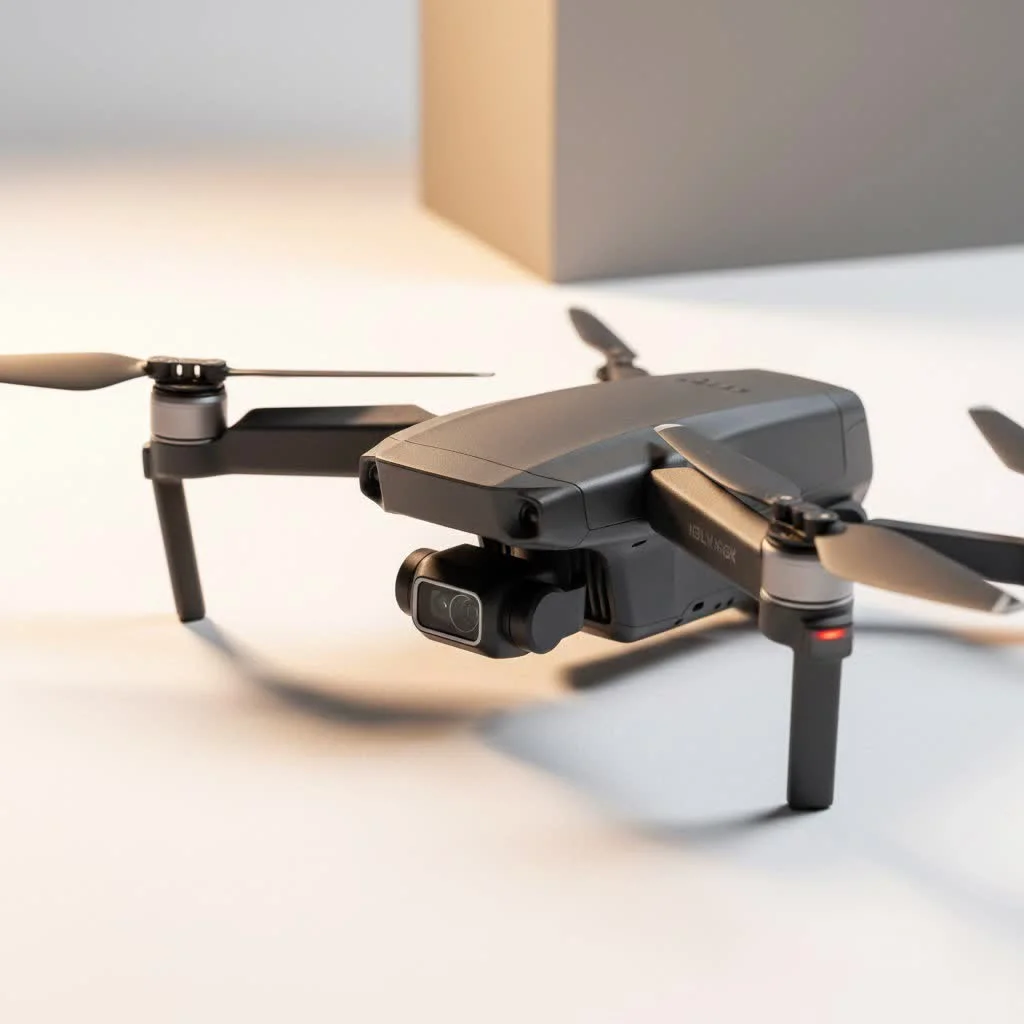
At its core, a hover drone is an unmanned aerial vehicle (UAV) equipped with advanced sensor technology that allows it to maintain a fixed position in the air with minimal to no pilot input. While nearly all modern drones have some form of hover capability, a true “hover drone” excels at it, holding its altitude and lateral position with incredible precision, even in challenging conditions.
The magic isn’t in the propellers; it’s in the brain of the drone. These machines use a sophisticated suite of sensors to constantly read their environment and make thousands of micro-adjustments per second to stay perfectly still.
“The difference between a basic drone and a high-quality hover drone is like the difference between balancing on one foot and standing firmly on two. The latter provides a stable platform that allows you to focus entirely on the task at hand, whether that’s cinematography or industrial inspection.” – David Chen, a lead UAV systems engineer.
The Technology Behind the Perfect Hover
Understanding what goes on under the hood helps appreciate the stability a hover drone offers. The stability is not a single feature but a symphony of technologies working in unison.
Key Components for Precision Hovering:
- GPS (Global Positioning System): This is the foundation. By locking onto multiple satellite signals, the drone knows its exact coordinates on the globe and can hold that position. However, GPS is only accurate to within a few feet and is often unavailable indoors.
- Optical Flow Sensors: These are small cameras, usually on the underside of the drone, that watch the ground. They use image recognition to detect movement and instruct the flight controller to counteract any drift, keeping the drone stationary relative to the ground below. This is crucial for stable indoor flight.
- Infrared and Ultrasonic Sensors (Sonar): Also typically mounted on the bottom, these sensors measure the distance to the ground or obstacles by bouncing sound or light waves off them. This allows the drone to maintain a precise altitude, preventing it from slowly rising or sinking.
- IMU (Inertial Measurement Unit): This is a combination of an accelerometer and a gyroscope. It detects even the slightest tilt, roll, or rotation, providing instant feedback to the motors to keep the aircraft level.
A true hover drone masterfully blends the data from all these sensors to create a stable, reliable, and safe flying platform.
Why Should You Choose a Hover Drone?
The benefits of a drone that can hold its position flawlessly are vast. It’s not just a convenience feature; it opens up new possibilities and enhances safety.
Unmatched Stability for Photographers and Videographers
|
Our Picks for the Best Drone in 2026
As an Amazon Associate I earn from qualifying purchases.
|
||
| Num | Product | Action |
|---|---|---|
| 1 | LỖI |

|
| 2 | Drone with 1080P Camera for Beginners and Adults, Foldable Remote Control Quadcopter with Voice Control, Gestures Selfie, Altitude Hold, One Key Start, 3D Flips, 2 Batteries, Toy for Beginners |
|
| 3 | Drone with Camera - Drones for Adults, with 2 Batteries, Carrying Case, Propellers, 1080P HD Foldable Drone with Stable Hover, Trajectory Flight, Gravity Control, One Key Take Off/Land, 3D Flip |
|
| 4 | DJI Mini 5 Pro Fly More Combo with DJI RC 2, Drone with Camera, 1-Inch CMOS, 4K Drone for Beginners with Omnidirectional Obstacle Sensing, ActiveTrack 360°, 225° Gimbal Rotation, 3 Batteries |
|
| 5 | DJI Mini 3 (DJI RC), Lightweight 3x Mechanical Gimbal Drones with Camera for Adults 4K, 38-min Flight Time, up to 32800ft (10km) Video Transmission, Vertical Shooting, GPS Auto Return Integrated |
|
| 6 | Drone with Camera 1080P HD FPV Foldable Drone for Adults and Beginners, RC Quadcopter with Gravity Control, One Key Take Off/Land, Optical Flow Positioning, 360° Flip, 3 Speed Mode, Waypoint Fly Grey |
|
| 7 | Drone with Camera for Adults, 2K HD FPV Drones with Upgrade Altitude Hold, One-Key Take Off/Landing, Speed Adjustment, Headless Mode, 2 Batteries, Toys Gifts for Teen Boys Girls, Beginner |
|
| 8 | DJI Mini 3 Fly More Combo (DJI RC), Drones with Camera for Adults 4K, 3 Batteries for 114-min Flight Time, Vertical Shooting, 32800ft (10km) Video Transmission, Lightweight Mini Drone for Beginners |
|
| 9 | DJI Neo Three-Battery Combo, Mini Drone with 4K UHD Camera for Adults, 135g Self Flying Drone that Follows You, Palm Takeoff, Subject Tracking, QuickShots, Stabilized Video (Controller-Free) |
|
| 10 | DJI Neo, Mini Drone with 4K UHD Camera for Adults, 135g Self Flying Drone that Follows You, Palm Takeoff, Subject Tracking, QuickShots, Stabilized Video, Built-In Propeller Guard (Controller-Free) |
|
For aerial imaging, stability is everything. A hover drone acts as your tripod in the sky, allowing you to capture:
- Long-exposure shots: Capture stunning light trails or silky-smooth water effects at dusk without any motion blur.
- Cinematic static shots: Frame a scene perfectly and hold it, creating a professional, high-production-value feel.
- Flawless timelapses: Keep the drone in the exact same spot as the world moves around it, resulting in breathtaking timelapse videos.
A Perfect Starting Point for Beginners
New pilots often find it overwhelming to manage altitude, direction, and camera controls simultaneously. A hover drone significantly shortens the learning curve. With its ability to stop and hold its position the moment you let go of the controls, it provides a safety net that prevents panic-induced crashes. This allows beginners to build confidence by focusing on one aspect of flying at a time.
Enhanced Safety in Complex Environments
When flying indoors or near obstacles, precision is critical. A hover drone’s ability to remain stationary without relying on GPS is a massive safety advantage. It can navigate tight spaces for tasks like:
- Real estate photography: Capture steady interior shots of large halls or atriums.
- Industrial inspections: Hover perfectly in front of a piece of machinery or a crack in a structure for detailed analysis.
- Warehouse management: Scan inventory or inspect high shelves without drifting into racks.
Key Features to Look For When Buying
If you’re convinced a hover drone is right for you, here are the crucial features to compare before making a purchase.
| Feature | Why It Matters for Hovering | What to Look For |
|---|---|---|
| Sensor Suite | The quality and number of sensors directly impact hover precision. | Look for drones with both GPS and downward-facing vision/sonar sensors for all-around stability. |
| Hover Time | This is the maximum time the drone can hold a hover on a single battery. | Check reviews and specifications for realistic flight times, not just the manufacturer’s maximum. |
| Wind Resistance | A powerful motor and smart flight controller are needed to hover in breezy conditions. | Look for a specified wind resistance level (e.g., Level 5, up to 24 mph). |
| Intelligent Flight Modes | Modes like “Tripod Mode” or “Position Hold” are specifically designed for ultra-stable hovering. | Ensure the drone’s software includes dedicated modes for stationary tasks. |
| Camera System | A stable platform is only useful if the camera can capture high-quality images. | A 3-axis gimbal is non-negotiable for smooth video and sharp photos. |
Before You Fly: A Quick Pre-Flight Checklist
Owning a powerful tool like a hover drone comes with responsibility. Always ensure a safe flight by running through a quick checklist.
- [ ] Check Your Surroundings: Be aware of people, buildings, trees, and power lines.
- [ ] Inspect Your Drone: Look for any damage to propellers, the body, or the camera.
- [ ] Verify Battery Levels: Ensure the drone battery and controller are fully charged.
- [ ] Calibrate the Compass: Before every flight in a new location, calibrate the compass for accurate GPS positioning.
- [ ] Confirm GPS Lock: Wait for the drone to indicate it has locked onto a sufficient number of satellites before taking off outdoors.
- [ ] Know the Rules: Be familiar with local and national drone regulations (like the FAA in the United States).
Frequently Asked Questions (FAQ)
What is the main difference between a hover drone and a regular drone?
The main difference is the precision and reliability of the hover. While most drones can hover, a dedicated hover drone uses a more advanced sensor suite (like optical flow and sonar) to maintain its position with extreme accuracy, especially indoors or without a GPS signal.
Can hover drones fly effectively in windy conditions?
Higher-end hover drones are designed with powerful motors and sophisticated algorithms to actively fight wind and maintain their position. However, every drone has its limits. Always check the manufacturer’s specified wind resistance level and fly with caution in gusty weather.
Are hover drones more expensive?
Generally, drones with superior hovering capabilities do cost more because they incorporate more advanced sensor technology and more powerful processors. However, this technology is becoming more common, and excellent options are now available at various price points.
How long can a typical hover drone stay in one spot?
This depends entirely on the drone’s battery life. Most consumer drones can hover for anywhere from 20 to 35 minutes on a single battery. Factors like wind, temperature, and altitude can affect this time.
Do all new drones have a good hover function?
Most new drones from reputable brands have a reliable GPS-based hover. The key differentiator for a true “hover drone” is its ability to hold a position without GPS, using vision and other sensors, which is a feature more common in mid-tier to high-end models.
The Future is Stable
The ability to achieve a perfect, stable hover has transformed the drone industry. It has made drones safer, easier to fly, and infinitely more useful as tools for creative and commercial work. Whether you are a first-time pilot looking for a forgiving aircraft or a seasoned professional demanding a reliable aerial platform, the hover drone offers the stability and precision you need to get the job done right.
Get our weekly buyer guide
Practical specs, not advice. Unsubscribe anytime.
I appreciated the breakdown of what makes a drone a ‘hover drone.’ I always thought it was just good GPS, but understanding the role of the advanced sensor technology really clarified things. My current drone does a decent job, but after reading this, I’m definitely looking into models specifically designed for that rock-solid hover. It would be perfect for my landscape photography.
As a hobbyist, I’ve struggled with getting truly stationary shots, especially when trying to film wildlife. The explanation of how hover drones work, particularly the advanced sensor technology, made me realize what I was missing. I just got a new drone that emphasizes this feature, and it’s fantastic. No more last-second drifts ruining my footage!
The concept of a drone maintaining a fixed position with minimal pilot input sounds amazing, and it’s why I bought my last one. While it’s better than my old model, I still find it drifts a bit in windy conditions, even with the ‘hover’ features. It’s not as rock-solid as I hoped, which can be annoying when trying to get a precise shot. Maybe I need to invest in a higher-end model.
I’ve been flying drones for years, and the frustration of a drifting shot is all too real. This guide really highlighted how much of a game-changer the hover drone technology is. I recently upgraded to a model with advanced sensor tech, and the difference in getting those perfectly stable aerial shots is incredible. It’s made my professional work so much easier and more precise.