A thermal drone is an unmanned aerial vehicle (UAV) equipped with a specialized camera that detects infrared radiation, or heat, to create images based on temperature differences. This technology allows users to see heat signatures invisible to the naked eye, making it an indispensable asset across various industries, including public safety, agriculture, and industrial inspections. With over 15 years of experience in the drone industry, this guide explains how thermal drones work, their key applications, and how to select the right model for specific needs.
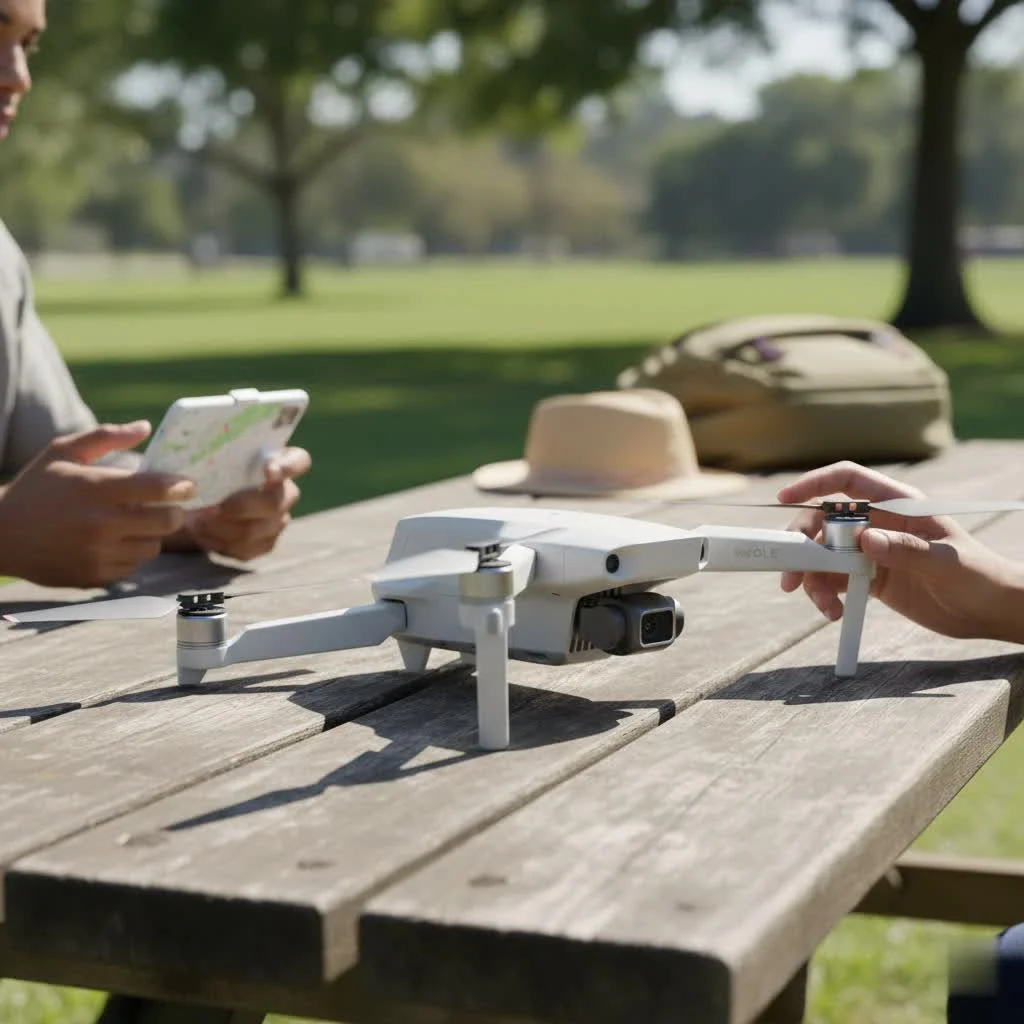
What is a Thermal Drone and How Does It Work?
A thermal drone, also known as a thermal imaging drone, is a UAV equipped with a special camera that detects infrared radiation, or heat. Unlike a standard camera that captures visible light, a thermal camera creates an image based on the temperature differences of objects and surfaces.
The Science Behind Thermal Imaging
Every object with a temperature above absolute zero (-273.15°C or -459.67°F) emits infrared radiation. A thermal camera’s sensor, called a microbolometer, detects these minute differences in radiation and translates them into a visual map called a thermogram.
In this map, different colors represent different temperatures. Typically, warmer objects appear as bright colors like red, orange, or white, while cooler objects are shown in darker colors like blue, purple, or black. This allows the operator to instantly identify heat sources or areas of heat loss.
“The power of a thermal drone lies in its ability to provide data that is otherwise completely invisible. It’s not just a picture; it’s a layer of actionable intelligence that can save lives, time, and money,” notes aerial imaging specialist, Dr. Evelyn Reed.
It’s crucial to understand that a thermal camera does not “see” through solid objects like walls. It detects the heat signature on the surface of the wall, which can indicate what’s happening behind it—for instance, a fire, a leaking pipe, or poor insulation.
Top Applications: Where Thermal Drones Make a Difference
The applications for a drone with a thermal camera are vast and continue to expand. Here are some of the most impactful sectors where this technology is proving to be a major upgrade.
Public Safety and Emergency Services
This is arguably the most critical application.
- Search and Rescue (SAR): Firefighters and rescue teams can locate missing persons in vast, dark, or smoke-filled environments by detecting their body heat. A thermal drone can scan large areas far more quickly than a ground team.
- Firefighting: Drones can see through smoke to identify hotspots, locate trapped individuals, and monitor the fire’s spread, providing invaluable situational awareness to commanders on the ground.
- Law Enforcement: Police use thermal drones for surveillance, tracking suspects at night, and reconstructing accident scenes.
Industrial and Infrastructure Inspections
|
Our Picks for the Best Drone in 2026
As an Amazon Associate I earn from qualifying purchases.
|
||
| Num | Product | Action |
|---|---|---|
| 1 | DJI Mini 5 Pro Fly More Combo with DJI RC 2, Drone with Camera, 1-Inch CMOS, 4K Drone for Beginners with Omnidirectional Obstacle Sensing, ActiveTrack 360°, 225° Gimbal Rotation, 3 Batteries |

|
| 2 | DJI Mini 3 Fly More Combo (DJI RC), Drones with Camera for Adults 4K, 3 Batteries for 114-min Flight Time, Vertical Shooting, 32800ft (10km) Video Transmission, Lightweight Mini Drone for Beginners |
|
| 3 | Drone with Camera for Adults, 2K HD FPV Drones with Upgrade Altitude Hold, One-Key Take Off/Landing, Speed Adjustment, Headless Mode, 2 Batteries, Toys Gifts for Teen Boys Girls, Beginner |
|
| 4 | DJI Neo, Mini Drone with 4K UHD Camera for Adults, 135g Self Flying Drone that Follows You, Palm Takeoff, Subject Tracking, QuickShots, Stabilized Video, Built-In Propeller Guard (Controller-Free) |
|
| 5 | Drone with 1080P Camera for Beginners and Adults, Foldable Remote Control Quadcopter with Voice Control, Gestures Selfie, Altitude Hold, One Key Start, 3D Flips, 2 Batteries, Toy for Beginners |
|
| 6 | LỖI |
|
| 7 | DJI Neo Three-Battery Combo, Mini Drone with 4K UHD Camera for Adults, 135g Self Flying Drone that Follows You, Palm Takeoff, Subject Tracking, QuickShots, Stabilized Video (Controller-Free) |
|
| 8 | Drone with Camera 1080P HD FPV Foldable Drone for Adults and Beginners, RC Quadcopter with Gravity Control, One Key Take Off/Land, Optical Flow Positioning, 360° Flip, 3 Speed Mode, Waypoint Fly Grey |
|
| 9 | Drone with Camera - Drones for Adults, with 2 Batteries, Carrying Case, Propellers, 1080P HD Foldable Drone with Stable Hover, Trajectory Flight, Gravity Control, One Key Take Off/Land, 3D Flip |
|
| 10 | DJI Mini 3 (DJI RC), Lightweight 3x Mechanical Gimbal Drones with Camera for Adults 4K, 38-min Flight Time, up to 32800ft (10km) Video Transmission, Vertical Shooting, GPS Auto Return Integrated |
|
Maintaining infrastructure is a massive undertaking, and thermal drones provide an efficient and safe solution.
- Building and Roof Inspections: A thermal drone can quickly identify areas of heat loss from poor insulation or locate water leaks beneath a roof’s surface by detecting temperature anomalies caused by moisture.
- Solar Farm Inspections: Manually inspecting thousands of solar panels is a slow process. A thermal drone can fly over a solar farm and instantly identify defective or underperforming panels that appear hotter than the surrounding ones.
- Power Line and Utility Inspections: Identifying failing components on power lines, which often overheat before they fail, can prevent power outages. Drones perform these inspections without risking human life.
Agriculture and Environmental Management
Precision agriculture benefits immensely from thermal imaging.
- Crop Health Monitoring: By analyzing the temperature of the plant canopy, farmers can detect areas of water stress or disease before they become visible to the naked eye.
- Irrigation Management: Thermal data helps farmers optimize irrigation by showing which parts of a field are receiving too much or too little water.
- Wildlife Monitoring: Researchers and conservationists use thermal drones to conduct animal censuses, track nocturnal species, and detect poachers without disturbing the wildlife.
How to Choose the Right Thermal Drone
Selecting the perfect thermal drone depends heavily on your specific application and budget. Here are the key factors to consider, broken down for clarity.
Key Thermal Camera Specifications
The camera is the heart of the system. Don’t get lost in the jargon; focus on these three specifications:
- Resolution: This is the number of pixels on the thermal sensor. Higher resolution (e.g., 640×512) provides a more detailed image, allowing you to see smaller temperature differences from farther away. For basic inspections, a lower resolution (e.g., 320×256) might suffice, but for public safety, higher is always better.
- Thermal Sensitivity (NETD): Measured in millikelvins (mK), this indicates the smallest temperature difference the camera can detect. A lower number is better. For example, a camera with <30 mK sensitivity is more precise than one with <50 mK.
- Frame Rate: Measured in Hertz (Hz), this is how many times the image refreshes per second. A higher frame rate (e.g., 30 Hz or 60 Hz) provides smoother video, which is crucial when the drone or the target is moving quickly.
Drone Platform and Features
- Flight Time: Longer flight times mean more area covered per battery. Aim for at least 25-30 minutes.
- Durability and Weather Resistance: If you’re working in harsh environments, an IP (Ingress Protection) rating is essential to protect against dust and water.
- Dual Camera Systems: Many professional thermal drones come with both a thermal and a standard RGB (visual) camera. This allows you to switch between views or see them side-by-side, which is incredibly useful for providing context to the thermal data.
- Radiometric Capabilities: A radiometric thermal camera doesn’t just show you relative temperature differences; it allows you to click on any pixel in the image and get an exact temperature reading. This is vital for professional inspection work.
Thermal Drone Comparison Table
| Feature | Entry-Level | Mid-Range Professional | High-End Specialist |
|---|---|---|---|
| Typical Use Case | Hobbyist, Basic Inspections | Public Safety, Inspections | Advanced Industrial, Research |
| Thermal Resolution | 160×120 – 320×256 | 640×512 | 640×512 or higher |
| Thermal Sensitivity | <60 mK | <40 mK | <30 mK |
| Camera Type | Usually non-radiometric | Radiometric Dual Camera | Radiometric, often with zoom |
| Flight Time | 20-25 minutes | 30-40 minutes | 40-55 minutes |
| Price Range | $2,000 – $5,000 | $7,000 – $15,000 | $15,000+ |
Getting Started: A Pre-Flight Checklist
Operating a thermal drone safely and effectively requires preparation. Before every flight, run through this quick checklist.
- [ ] Check Regulations: Ensure you are compliant with local aviation authorities regarding drone operation.
- [ ] Inspect Equipment: Check propellers, batteries, and the thermal camera lens for any damage.
- [ ] Calibrate Camera: Perform a Non-Uniformity Correction (NUC) to ensure the thermal sensor is properly calibrated for an even image. Most drones do this automatically.
- [ ] Set Emissivity: Adjust the camera’s emissivity setting based on the surface material you are inspecting for accurate temperature readings.
- [ ] Plan Your Flight: Define your flight path, altitude, and survey area before taking off.
- [ ] Monitor Weather: Avoid flying in rain, fog, or high winds, as this can affect both flight safety and thermal data quality.
Frequently Asked Questions (FAQ)
What is the average cost of a thermal drone?
The cost varies widely based on capability. Entry-level models can start around $2,000, while professional systems for public safety or industrial inspections can range from $7,000 to over $30,000.
Can a thermal drone see through walls or fog?
No, a thermal drone cannot see through solid objects like walls. It reads the surface temperature. However, it can see through obscurants like smoke, dust, and light fog much better than a visual camera because these particles do not block infrared radiation as effectively.
How high can a thermal drone fly?
Legally, most jurisdictions restrict drone flight to 400 feet (about 120 meters) above ground level. Technically, the drone can fly much higher, but the effectiveness of the thermal camera decreases with altitude as the resolution per pixel on the ground becomes lower.
Do I need a special license to operate a thermal drone?
Yes, in most countries, operating a drone for commercial purposes, which includes most thermal applications, requires a specific pilot certification or license. Always check with your local aviation authority for the exact requirements.
Is there a difference between night vision and thermal imaging?
Yes, a significant one. Night vision technology amplifies small amounts of visible light to see in the dark. It requires some ambient light (like moonlight) to work. Thermal imaging needs no light at all, as it detects heat signatures instead of light.
Your Next Steps into the World of Thermal Imaging
The thermal drone is more than just a flying camera; it’s a powerful data collection tool that offers unprecedented insights. From saving lives in a search and rescue mission to preventing catastrophic failures in our infrastructure, its value is undeniable. As the technology becomes more accessible and powerful, its applications will only continue to grow. Whether you are a professional looking to add a new capability to your toolkit or a technologist fascinated by what’s possible, understanding thermal drone technology is key to unlocking a new perspective on the world around us.
Frequently Asked Questions
What is the average cost of a thermal drone?
The cost of a thermal drone varies significantly based on its capabilities and intended use. Entry-level models typically start around $2,000, while professional systems designed for public safety or industrial inspections can range from $7,000 to over $30,000.
Can a thermal drone see through walls or fog?
No, a thermal drone cannot see through solid objects like walls; it detects surface temperature. However, thermal drones are highly effective at seeing through obscurants such as smoke, dust, and light fog because these particles do not block infrared radiation as effectively as visible light.
How high can a thermal drone fly?
Legally, most jurisdictions restrict drone flight to 400 feet (approximately 120 meters) above ground level for safety and regulatory compliance. While drones can technically fly higher, the effectiveness of the thermal camera diminishes with increased altitude due to lower resolution per pixel on the ground.
Do I need a special license to operate a thermal drone?
Yes, in most countries, operating a drone for commercial purposes, which includes the majority of thermal imaging applications, requires a specific pilot certification or license. It is essential to consult your local aviation authority for precise requirements and regulations.
What is the difference between night vision and thermal imaging?
Night vision technology amplifies existing visible light to allow sight in low-light conditions, requiring some ambient light like moonlight. In contrast, thermal imaging detects heat signatures and does not require any ambient light to function, making it effective in complete darkness.
How to Choose the Right Thermal Drone
Selecting the ideal thermal drone involves considering key camera specifications and drone platform features to match your application and budget.
Focus on the thermal sensor's pixel count. Higher resolutions, such as 640x512, provide more detailed images and allow for detection of smaller temperature differences from greater distances, which is crucial for public safety and detailed inspections.
Check the camera's thermal sensitivity, measured in millikelvins (mK). A lower NETD value, such as <30 mK, indicates greater precision in detecting minute temperature differences, which is vital for accurate professional inspection work.
Determine the required frame rate, measured in Hertz (Hz). A higher frame rate, like 30 Hz or 60 Hz, ensures smoother video footage, which is particularly important when the drone or the target object is in motion.
Look for features such as flight time (aim for 25-30 minutes minimum), durability and weather resistance (IP rating), and dual camera systems (thermal and RGB) for contextual data. Radiometric capabilities are also essential for precise temperature readings from individual pixels.
Get our weekly buyer guide
Practical specs, not advice. Unsubscribe anytime.
Great info here! I’m a first responder and we’re always evaluating new tech for public safety. The explanation of how these UAVs detect infrared radiation was very clear. It’s definitely making me consider pushing for an upgrade to our current drone fleet.
As someone who’s been in the drone industry for a few years, I found this guide to be incredibly thorough. The part about how thermal cameras create images based on temperature differences, rather than visible light, was explained really well. It’s a fantastic resource for anyone wanting to understand the core mechanics.
Good overview of thermal drone technology. I was hoping for a bit more detail on specific models or brands that are good for industrial inspections, as that’s my main use case. The general applications section was helpful, but a few more concrete examples would’ve been nice.
I’ve been looking into thermal drones for a while now, specifically for agricultural use. This guide really helped clarify how the temperature differences are used to create images, which is super useful for crop health monitoring. I appreciate the breakdown of how they work beyond just ‘seeing heat’.