You’ve seen them in the news, buzzing over parks, and capturing stunning aerial shots in movies. The term Uav Drone is becoming increasingly common, representing a technology that has soared from niche military projects to mainstream commercial and recreational use. But what exactly is a UAV drone? As an expert with over 15 years in the field, I’m here to demystify these incredible machines, breaking down what they are, how they work, and how they are changing our world from above.
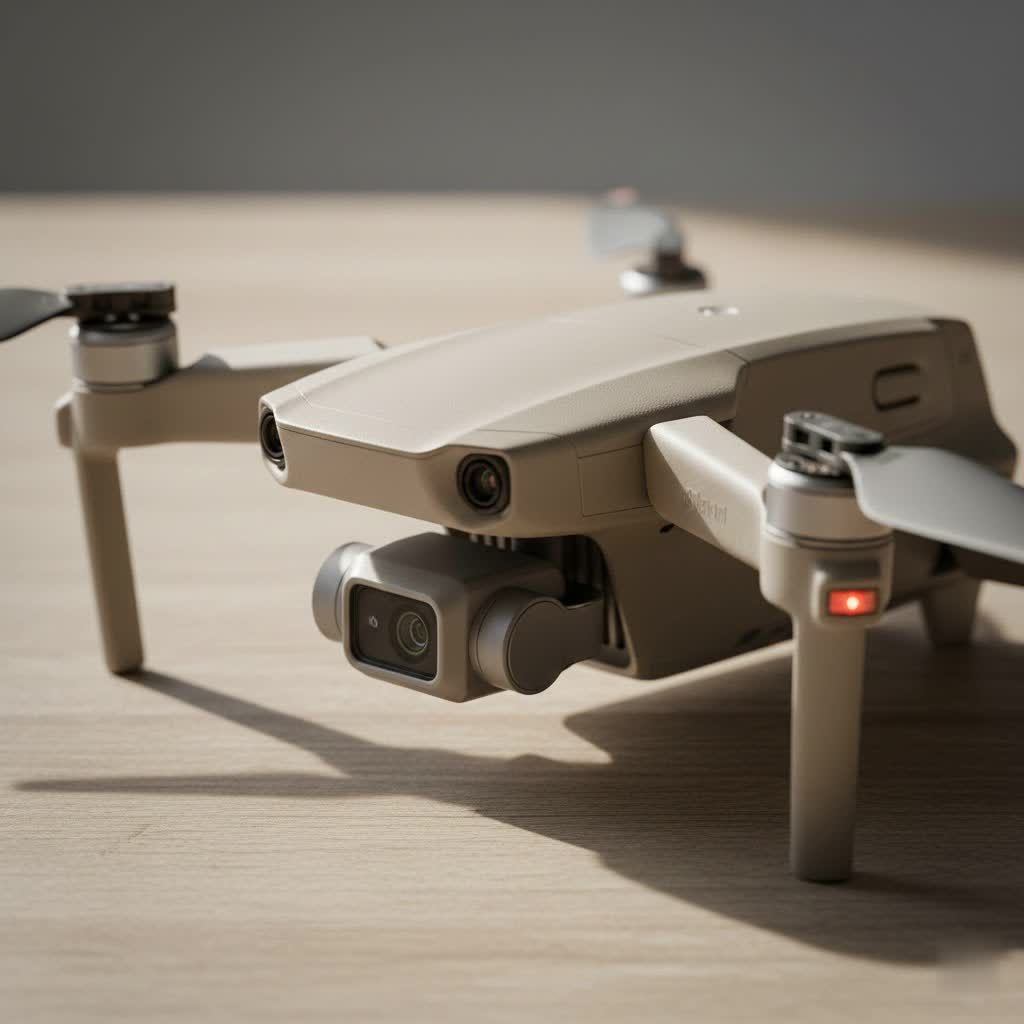
At its core, a UAV (Unmanned Aerial Vehicle) is an aircraft without a human pilot on board. It’s controlled either by a remote human operator or through onboard computers running sophisticated software. The word “drone” is the popular, everyday term for these devices, originally nicknamed for the buzzing sound of early models, reminiscent of a male bee. In professional, military, and regulatory circles, you’ll hear “UAV” or “UAS” (Unmanned Aircraft System), but for most people, “drone” is the word they know. For all practical purposes, the terms are interchangeable.
UAV vs. Drone: Is There a Difference?
This is one of the most common questions people ask. Technically, “UAV” is the more precise term for the aircraft itself, while “drone” is the colloquial name. Think of it like “automobile” versus “car.” One is a formal classification, the other is what we say in everyday conversation.
The distinction becomes slightly more technical when we introduce the term “UAS” or “Unmanned Aircraft System.” A UAS refers to the entire operational setup: the UAV (the aircraft), the ground-based controller, and the communication system connecting them. However, in popular and even many professional contexts, when people talk about a UAV drone, they are referring to the same thing: a flying, pilotless vehicle. Every UAV is a drone, and in the context of aerial vehicles, every drone is a UAV.
How Do UAV Drones Work?
Behind the seemingly effortless flight of a UAV drone is a symphony of advanced technology. While designs vary wildly, most drones are built around a few core components:
- Airframe: The body of the drone, designed to be both lightweight and durable to support all other components.
- Propulsion System: This includes the motors, propellers, and electronic speed controllers (ESCs) that provide thrust and control the drone’s movement.
- Flight Controller: The “brain” of the drone. It’s a small computer that takes input from sensors and the remote pilot to keep the aircraft stable and execute commands.
- Sensors: A suite of sensors, including GPS for positioning, gyroscopes and accelerometers for stability, and often magnetometers (compasses), work together to allow for precise control and autonomous functions.
- Battery: The power source, typically a rechargeable lithium-polymer (LiPo) battery. Battery life is one of the most critical limitations of modern drone technology.
- Payload: This refers to whatever the drone is carrying to perform its mission. It can be a high-resolution camera, thermal sensors, LiDAR scanners, or even a package for delivery.
A pilot on the ground uses a handheld transmitter to send radio signals to the drone, commanding it to move up, down, forward, back, and side to side. More advanced UAV drone models can perform autonomous flights by following pre-programmed GPS waypoints.
The Main Types of UAV Drones
UAV drones are not a one-size-fits-all technology. They are designed for specific purposes, which is reflected in their physical form.
Multi-Rotor Drones
|
Our Picks for the Best Drone in 2026
As an Amazon Associate I earn from qualifying purchases.
|
||
| Num | Product | Action |
|---|---|---|
| 1 | LỖI |

|
| 2 | DJI Mini 3 (DJI RC), Lightweight 3x Mechanical Gimbal Drones with Camera for Adults 4K, 38-min Flight Time, up to 32800ft (10km) Video Transmission, Vertical Shooting, GPS Auto Return Integrated |
|
| 3 | Drone with Camera for Adults, 2K HD FPV Drones with Upgrade Altitude Hold, One-Key Take Off/Landing, Speed Adjustment, Headless Mode, 2 Batteries, Toys Gifts for Teen Boys Girls, Beginner |
|
| 4 | Drone with Camera - Drones for Adults, with 2 Batteries, Carrying Case, Propellers, 1080P HD Foldable Drone with Stable Hover, Trajectory Flight, Gravity Control, One Key Take Off/Land, 3D Flip |
|
| 5 | DJI Neo Three-Battery Combo, Mini Drone with 4K UHD Camera for Adults, 135g Self Flying Drone that Follows You, Palm Takeoff, Subject Tracking, QuickShots, Stabilized Video (Controller-Free) |
|
| 6 | Drone with 1080P Camera for Beginners and Adults, Foldable Remote Control Quadcopter with Voice Control, Gestures Selfie, Altitude Hold, One Key Start, 3D Flips, 2 Batteries, Toy for Beginners |
|
| 7 | DJI Neo, Mini Drone with 4K UHD Camera for Adults, 135g Self Flying Drone that Follows You, Palm Takeoff, Subject Tracking, QuickShots, Stabilized Video, Built-In Propeller Guard (Controller-Free) |
|
| 8 | DJI Mini 5 Pro Fly More Combo with DJI RC 2, Drone with Camera, 1-Inch CMOS, 4K Drone for Beginners with Omnidirectional Obstacle Sensing, ActiveTrack 360°, 225° Gimbal Rotation, 3 Batteries |
|
| 9 | Drone with Camera 1080P HD FPV Foldable Drone for Adults and Beginners, RC Quadcopter with Gravity Control, One Key Take Off/Land, Optical Flow Positioning, 360° Flip, 3 Speed Mode, Waypoint Fly Grey |
|
| 10 | DJI Mini 3 Fly More Combo (DJI RC), Drones with Camera for Adults 4K, 3 Batteries for 114-min Flight Time, Vertical Shooting, 32800ft (10km) Video Transmission, Lightweight Mini Drone for Beginners |
|
These are the most recognizable type of drone, including quadcopters (4 rotors), hexacopters (6 rotors), and octocopters (8 rotors). Their ability to take off and land vertically, as well as hover in place, makes them perfect for aerial photography, videography, and detailed inspections. While incredibly stable and maneuverable, their flight times are typically shorter than other types.
Fixed-Wing Drones
Resembling a traditional airplane, fixed-wing UAVs are built for endurance and speed. They can’t hover but can cover large areas much more efficiently than a multi-rotor. This makes them the go-to choice for applications like agricultural mapping, pipeline surveillance, and large-scale land surveying. They require a runway or a launcher for takeoff and a net or open space for landing.
Single-Rotor Drones
These drones look like miniature helicopters. They combine the heavy payload capacity and long endurance of gas-powered engines with the ability to hover. Their complexity makes them less common in the consumer market, but they excel at tasks like carrying heavy LiDAR equipment for detailed mapping or performing precision agricultural spraying.
Fixed-Wing Hybrid VTOL
The cutting edge of UAV drone design, hybrid models combine the best of both worlds. They feature rotors that allow for vertical takeoff and landing (VTOL) like a multi-rotor, then transition to forward flight using their wings like a fixed-wing aircraft. This versatility eliminates the need for runways and makes them highly efficient for long-range missions like medical supply delivery and extensive infrastructure inspection.
What Are UAV Drones Used For? Exploring Key Applications
Originally developed for military missions considered too “dull, dirty, or dangerous” for human pilots, UAVs have found a vast array of civilian and commercial applications.
“The UAV drone isn’t just a flying camera; it’s a versatile tool that is revolutionizing data collection. From ensuring the structural integrity of a bridge to helping a farmer maximize crop yield, this technology provides critical insights safely and efficiently,” says Dr. Amelia Vance, a leading expert in remote sensing technology.
Commercial and Industrial Uses
- Agriculture: Farmers use drones for “precision agriculture” to monitor crop health, manage irrigation, and apply pesticides with surgical accuracy.
- Construction & Real Estate: Drones create detailed 3D models of construction sites to track progress and provide stunning aerial photos and videos for property listings.
- Energy and Utilities: Companies use UAV drones to inspect power lines, wind turbines, and oil pipelines, often in remote and dangerous locations.
- Public Safety: Fire departments use drones with thermal cameras to spot hotspots in fires, while search and rescue teams use them to locate missing persons in difficult terrain.
- Package Delivery: Companies are rapidly developing drone delivery services for everything from small packages to critical medical supplies.
Recreational and Creative Uses
Beyond their commercial utility, drones have unleashed a wave of creativity. Hobbyists use them for drone racing and simply for the joy of flight, while photographers and filmmakers capture breathtaking perspectives that were once impossible or prohibitively expensive to achieve.
Flying Legally: A Quick Guide to UAV Drone Regulations
With great technology comes great responsibility. Flying a UAV drone isn’t a free-for-all. Aviation authorities worldwide, such as the Federal Aviation Administration (FAA) in the United States, have established rules to ensure safety. Key regulations for recreational flyers often include:
- Registering your drone if it weighs over a certain amount (0.55 lbs or 250 grams in the U.S.).
- Keeping your drone within your visual line of sight.
- Flying at or below 400 feet (120 meters).
- Avoiding restricted airspace, such as near airports, stadiums, and sensitive government facilities.
- Not flying over people.
Commercial pilots are typically required to pass a knowledge test and obtain a remote pilot certificate. Always check the specific laws in your country and local area before you fly.
Frequently Asked Questions (FAQ)
What does UAV stand for?
UAV stands for Unmanned Aerial Vehicle. It refers to any aircraft that operates without a pilot on board.
Can a UAV drone fly autonomously?
Yes, many modern UAV drones have autonomous capabilities. They can follow pre-programmed flight paths using GPS, automatically take off and land, and even use sensors to avoid obstacles.
How far can a UAV drone fly?
The range varies dramatically depending on the model. Small consumer drones may have a range of a few kilometers, while advanced professional and military UAVs can be controlled from hundreds or even thousands of miles away via satellite links.
Do I need a license to fly a UAV drone?
This depends on your location and the purpose of your flight. In many countries, flying for commercial purposes requires a license or certification. Recreational use has fewer restrictions, but you must still follow all local aviation laws.
What is the difference between a UAV and a quadcopter?
A quadcopter is a specific type of UAV. “UAV” is the broad category for all unmanned aircraft, while a quadcopter is a multi-rotor drone with four propellers. All quadcopters are UAVs, but not all UAVs are quadcopters.
The Future is in the Air
The UAV drone is more than just a passing trend; it is a transformative technology that is reshaping industries, unleashing creativity, and providing invaluable services. From their military origins to their current role as a ubiquitous tool, these unmanned aerial vehicles continue to evolve at a breathtaking pace. As technology improves in areas like battery life, autonomy, and sensor capabilities, the potential applications for these incredible machines are truly limitless. Whether you’re a professional looking to improve your business or a hobbyist seeking a new perspective, the sky is no longer the limit.
