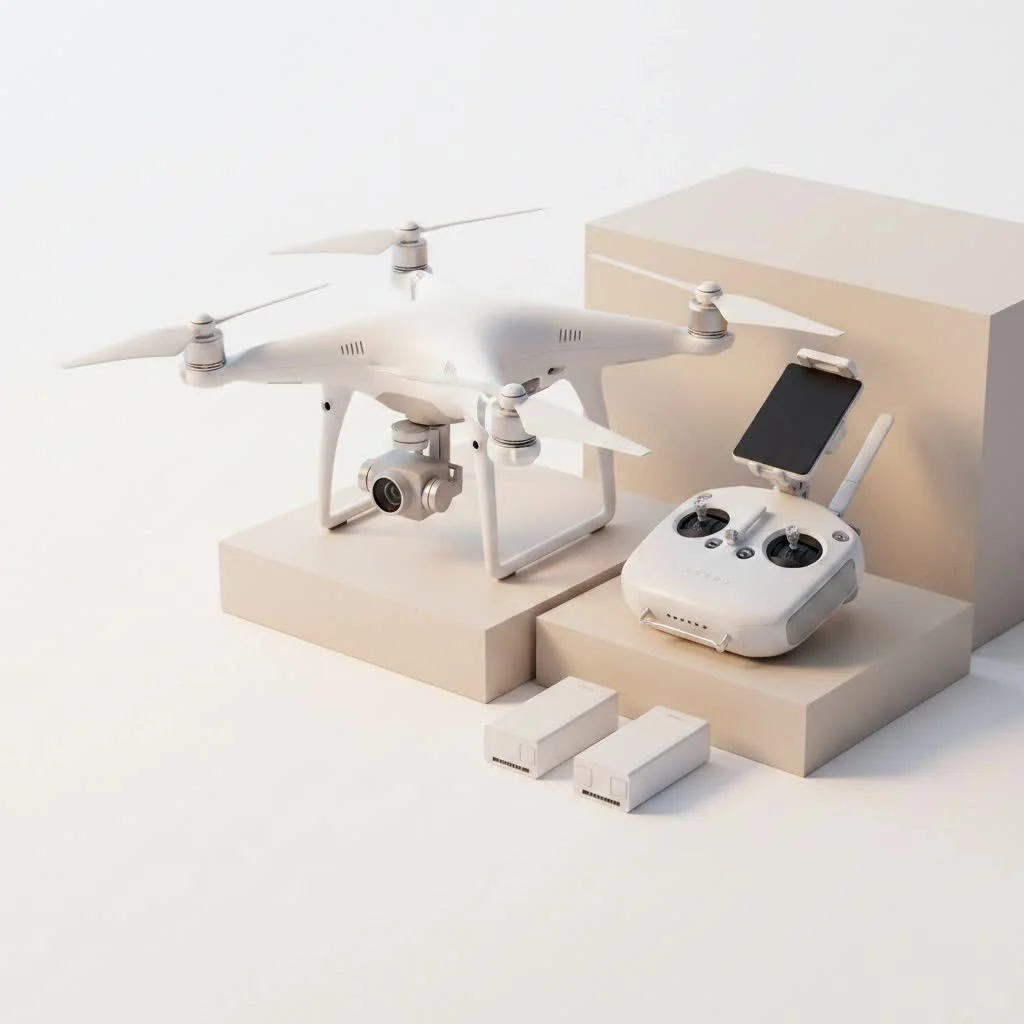
Drones with thermal cameras visualize the world in terms of heat, detecting infrared radiation emitted by all objects above absolute zero. This technology allows operators to “see” in complete darkness, through smoke, and past visual camouflage, making them invaluable for applications like locating lost hikers, identifying faulty solar panels, and detecting overheating electrical components. These drones convert invisible heat signatures into actionable intelligence, revolutionizing various industries.
How Do Drones with Thermal Cameras Actually Work?
At its core, the technology is elegantly simple. Every object with a temperature above absolute zero emits infrared radiation. While humans can feel this energy as heat, our eyes cannot see it. A thermal camera is specifically designed to detect and visualize this infrared energy.
Here’s a simple breakdown of the process:
- Specialized Lens: The drone’s camera is equipped with a lens, often made of a material like Germanium, which allows infrared frequencies to pass through it. Regular glass blocks these frequencies.
- Thermal Sensor: Behind the lens is a sophisticated sensor called a microbolometer. This sensor detects the incoming infrared radiation from various objects in the drone’s field of view.
- Image Processing: The microbolometer converts the infrared energy into electrical signals. An image processor then takes these signals and translates them into a visible image, called a thermogram.
- Visual Display: This thermogram is displayed on a screen, where different temperatures are represented by different colors or shades. Common color palettes include “White Hot” (hotter objects are whiter), “Black Hot” (hotter objects are blacker), and multi-color palettes like “Ironbow,” where colors like red, orange, and yellow represent heat, and cooler tones like blue and purple represent colder objects.
A regular camera shows how an object reflects light, but a thermal camera shows how much heat energy an object is emitting. This allows operators to “see” in complete darkness, through smoke, and past visual camouflage.
Top Applications for Drones with Thermal Cameras
The ability to visualize heat from an aerial perspective has unlocked unprecedented capabilities across numerous sectors. What was once dangerous, time-consuming, or impossible is now routine for professionals equipped with a drone with a thermal camera.
Public Safety: Search & Rescue and Firefighting
In emergency services, time is the most critical factor. Thermal drones are force multipliers for first responders.
- Search and Rescue (SAR): A person’s body heat stands out dramatically against a cool nighttime landscape. SAR teams can scan vast, difficult terrains like forests or mountains in a fraction of the time it would take on foot, locating missing persons quickly and efficiently.
- Firefighting: Fire crews can see through thick smoke to identify the heart of a fire, locate trapped individuals, and find smoldering hotspots that could re-ignite. This aerial intelligence provides unparalleled situational awareness, keeping firefighters safer and making their efforts more effective.
|
Our Picks for the Best Drone in 2026
As an Amazon Associate I earn from qualifying purchases.
|
||
| Num | Product | Action |
|---|---|---|
| 1 | DJI Mini 3 (DJI RC), Lightweight 3x Mechanical Gimbal Drones with Camera for Adults 4K, 38-min Flight Time, up to 32800ft (10km) Video Transmission, Vertical Shooting, GPS Auto Return Integrated |

|
| 2 | DJI Neo Three-Battery Combo, Mini Drone with 4K UHD Camera for Adults, 135g Self Flying Drone that Follows You, Palm Takeoff, Subject Tracking, QuickShots, Stabilized Video (Controller-Free) |
|
| 3 | LỖI |
|
| 4 | DJI Mini 3 Fly More Combo (DJI RC), Drones with Camera for Adults 4K, 3 Batteries for 114-min Flight Time, Vertical Shooting, 32800ft (10km) Video Transmission, Lightweight Mini Drone for Beginners |
|
| 5 | DJI Mini 5 Pro Fly More Combo with DJI RC 2, Drone with Camera, 1-Inch CMOS, 4K Drone for Beginners with Omnidirectional Obstacle Sensing, ActiveTrack 360°, 225° Gimbal Rotation, 3 Batteries |
|
| 6 | Drone with 1080P Camera for Beginners and Adults, Foldable Remote Control Quadcopter with Voice Control, Gestures Selfie, Altitude Hold, One Key Start, 3D Flips, 2 Batteries, Toy for Beginners |
|
| 7 | Drone with Camera - Drones for Adults, with 2 Batteries, Carrying Case, Propellers, 1080P HD Foldable Drone with Stable Hover, Trajectory Flight, Gravity Control, One Key Take Off/Land, 3D Flip |
|
| 8 | Drone with Camera 1080P HD FPV Foldable Drone for Adults and Beginners, RC Quadcopter with Gravity Control, One Key Take Off/Land, Optical Flow Positioning, 360° Flip, 3 Speed Mode, Waypoint Fly Grey |
|
| 9 | Drone with Camera for Adults, 2K HD FPV Drones with Upgrade Altitude Hold, One-Key Take Off/Landing, Speed Adjustment, Headless Mode, 2 Batteries, Toys Gifts for Teen Boys Girls, Beginner |
|
| 10 | DJI Neo, Mini Drone with 4K UHD Camera for Adults, 135g Self Flying Drone that Follows You, Palm Takeoff, Subject Tracking, QuickShots, Stabilized Video, Built-In Propeller Guard (Controller-Free) |
|
Industrial Inspections
Maintaining infrastructure is a massive undertaking, but thermal drones make it safer and more efficient.
- Energy Sector: Inspectors can fly along power lines to detect overheating components, which are a clear sign of an impending failure. This proactive maintenance prevents costly outages.
- Solar Farms: A malfunctioning or underperforming solar cell appears hotter than its neighbors. A drone can scan an entire solar farm in minutes, identifying specific panels that need maintenance.
- Roofing and Construction: Thermal imaging quickly reveals areas of a roof where insulation is failing or moisture is trapped, showing up as cooler spots on the thermogram. This allows for targeted repairs before major damage occurs.
Agriculture and Environmental Management
Precision agriculture relies on data, and thermal drones provide a crucial layer.
- Irrigation Management: By observing the temperature of the plant canopy, farmers can identify areas of their fields that are water-stressed, allowing for more efficient irrigation and healthier crops.
- Wildlife Monitoring: Researchers and conservationists can locate and count animal populations, even nocturnal species, without disturbing them. This is vital for tracking herd health, studying behavior, and combating poaching.
“The advent of affordable, high-resolution thermal drones has democratized a technology once reserved for military applications. We’re now seeing innovators in every field, from farming to filmmaking, leveraging thermal data to make smarter decisions.” – Dr. Alistair Finch, Remote Sensing Technologist
Key Features to Consider When Buying a Thermal Drone
Not all thermal drones are created equal. If you’re considering investing in a drone with a thermal camera, here are the critical specifications to look at.
Thermal Resolution
Just like a regular camera, thermal resolution is measured in pixels (e.g., 640×512). Higher resolution means a sharper, more detailed thermal image. For tasks requiring precise analysis, like inspecting small components on a circuit board, higher resolution is essential. For applications like spotting a person in a field, a lower resolution may suffice.
Radiometric vs. Non-Radiometric
This is a crucial distinction.
- Non-Radiometric: These cameras show you relative temperature differences. You can see that one spot is hotter than another, but you can’t get an exact temperature reading.
- Radiometric: These advanced cameras allow you to measure the exact temperature of any pixel in the image. This is vital for industrial inspections where you need to know if a component is operating within its specified temperature limits.
Flight Platform: Stability, Flight Time, and Range
The drone itself is just as important as the camera. Look for a platform with a stable gimbal to ensure smooth, clear imagery. Consider the required flight time and operational range for your typical missions. Longer flight times mean more ground covered on a single battery, which is crucial for large-scale operations.
Software and Analysis Tools
The value of thermal data is unlocked through analysis. Leading drone manufacturers provide powerful software that allows you to change color palettes, set temperature alarms (isotherms), and generate detailed reports. Ensure the drone’s software ecosystem meets your post-flight analysis and reporting needs.
Frequently Asked Questions (FAQ)
How much does a drone with a thermal camera cost?
The cost varies widely based on features like resolution and radiometric capabilities. Entry-level models can start around a few thousand dollars, while high-end, professional systems used for detailed industrial inspections can cost tens of thousands of dollars.
Can a thermal drone see through walls?
No, this is a common misconception from movies. A thermal camera cannot see through solid objects like walls. However, it can detect the heat signature on the surface of the wall. For example, it could reveal the location of wooden studs inside a wall because the wood conducts heat differently than the drywall and insulation around it.
What is the best thermal drone for a beginner?
For those new to thermal imaging, a model that integrates both a thermal and a visual camera is highly recommended. This allows you to switch between views or see them side-by-side, providing context to what you are seeing in the thermal spectrum. Look for models with user-friendly software and good support resources.
Can you fly a thermal drone at night?
Absolutely. Since thermal cameras detect heat instead of visible light, they work just as well in complete darkness as they do during the day. This makes them exceptionally valuable for nighttime operations in security, law enforcement, and search and rescue.
Are there special regulations for flying a thermal drone?
The regulations for flying a thermal drone are generally the same as for any other drone and are set by your national aviation authority (like the FAA in the United States). However, operators must be mindful of privacy laws, as thermal technology can potentially perceive information not visible to the naked eye. Always fly responsibly and respect privacy.
A New Way of Seeing the World
A drone with a thermal camera is more than a piece of high-tech equipment; it is a powerful tool for perception. It grants us the ability to see a hidden world of energy, enabling us to work more safely, efficiently, and intelligently. Whether you are protecting a community, managing critical infrastructure, or nurturing the land, this technology provides insights that were once unimaginable. As you embark on your journey with thermal drones, remember that each flight is an opportunity to discover something new and make a tangible impact.
Frequently Asked Questions
How much does a drone with a thermal camera typically cost?
The cost of a thermal drone varies significantly based on its features, such as resolution and radiometric capabilities. Entry-level models can start at a few thousand dollars, while high-end professional systems for detailed industrial inspections may cost tens of thousands of dollars.
Can thermal drones see through solid objects like walls?
No, thermal cameras cannot see through solid objects like walls; this is a common misconception. However, they can detect the heat signature on the surface of a wall, which might reveal underlying structures like wooden studs due to differences in heat conduction.
What features should a beginner look for in a thermal drone?
For beginners, a thermal drone that integrates both a thermal and a visual camera is highly recommended. This allows users to switch between views or see them side-by-side, providing essential context to the thermal imagery. Look for models with user-friendly software and robust support resources.
Are thermal drones effective for nighttime operations?
Yes, thermal drones are exceptionally effective for nighttime operations because they detect heat instead of visible light. This capability makes them invaluable for tasks in complete darkness, such as security, law enforcement, and search and rescue missions.
Are there specific regulations for flying drones with thermal cameras?
Regulations for flying thermal drones are generally the same as for any other drone, governed by national aviation authorities like the FAA in the United States. Operators must also be aware of privacy laws, as thermal technology can perceive information not visible to the naked eye, requiring responsible flight practices.
I’ve been looking into thermal drones for a while, specifically for inspecting solar panels. The breakdown of how they detect infrared radiation was super helpful. I finally pulled the trigger on a model after reading about their ability to pinpoint faulty panels quickly. It’s already saving me so much time compared to manual checks.
This guide really clarified the practical applications. I’m a search and rescue volunteer, and the idea of using these to locate lost hikers, even in complete darkness, is a game-changer. I’m currently training with a unit, and the ability to see through smoke is just incredible. Definitely a powerful tool for our team.
I appreciate the info on detecting overheating electrical components. My only minor complaint is that some of the entry-level thermal drones can be a bit tricky to calibrate for precise temperature readings. It takes a bit of practice to get consistent results, but the core technology is definitely useful for preventative maintenance.
As someone in property management, identifying heat signatures for insulation issues has always been a challenge. The explanation of how these drones convert invisible heat into actionable intelligence made me realize how much I’m missing. I’m now seriously considering investing in one for our building inspections. It seems like a smart way to catch problems early.