Welcome to the ultimate guide on the most popular aerial vehicle in the skies today. If you’ve ever been captivated by stunning aerial footage or the buzzing sound of a futuristic craft overhead, you were likely witnessing a Quadcopter Drone in action. Here at RVSWS, with over 15 years of hands-on experience, we’ve seen this technology evolve from a niche hobby into a global phenomenon. This article will break down everything you need to know, from the basic mechanics to choosing the perfect model for your adventures.
What Exactly Is a Quadcopter Drone?
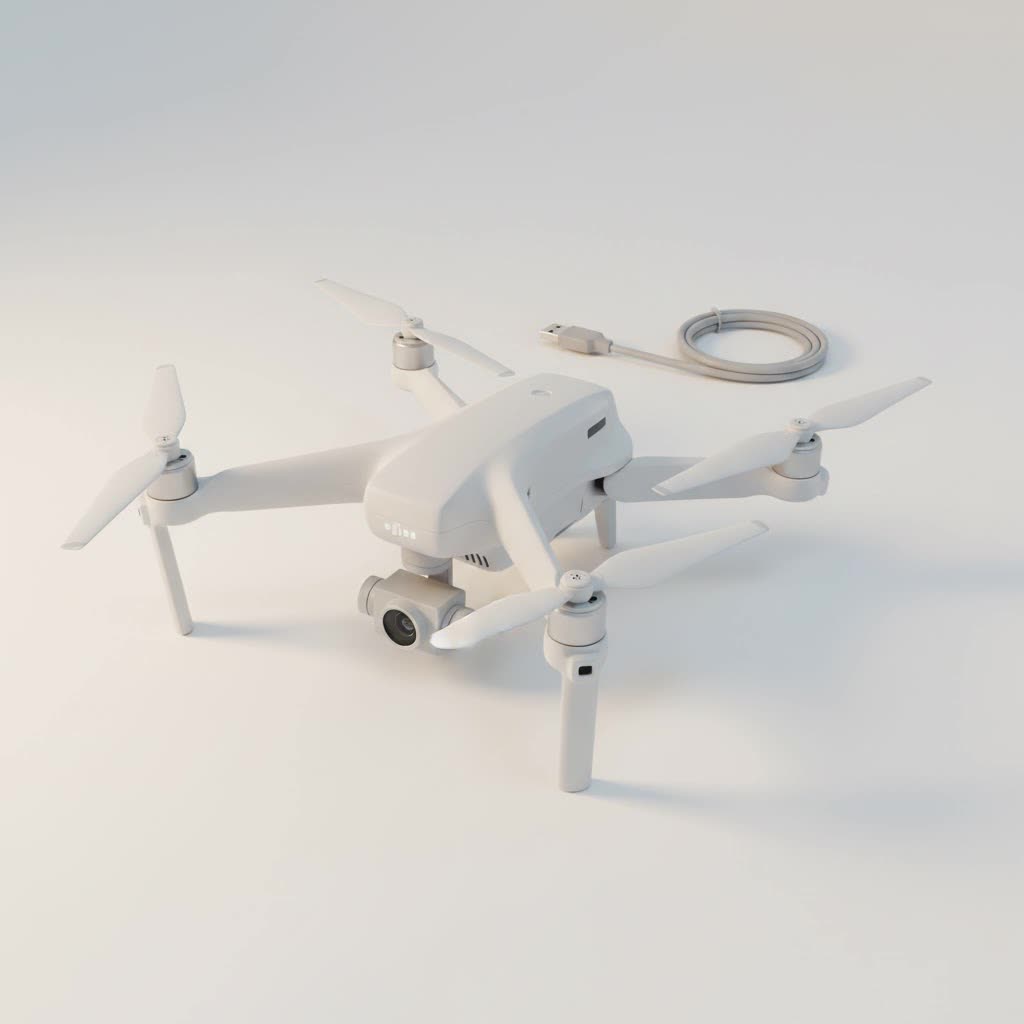
At its core, a quadcopter drone is an unmanned aerial vehicle (UAV) that is lifted and propelled by four rotors. This four-rotor design is the most common configuration for consumer and professional drones due to its incredible stability and agility. Unlike a fixed-wing airplane, a quadcopter doesn’t need a runway; it can take off and land vertically, hover in a fixed position, and change direction with remarkable speed.
The magic lies in how it controls movement. Two of the four motors spin clockwise, while the other two spin counter-clockwise. This pairing cancels out rotational torque, allowing the drone to remain stable. To move forward, the rear propellers spin faster, tilting the craft and pushing it ahead. To turn, the drone adjusts the speed of specific motor pairs. It’s a simple yet brilliant piece of engineering that makes flight intuitive and precise.
The Core Components of a Quadcopter Drone
Understanding the anatomy of your drone is the first step toward becoming a skilled pilot and owner. While designs vary, almost every quadcopter drone is built around these key components:
- The Frame: This is the skeleton of the drone, typically in an ‘X’ or ‘+’ shape, that holds everything together. Modern frames are made from lightweight yet durable materials like carbon fiber or high-strength plastic to withstand the inevitable bumps and scrapes.
- Brushless Motors: Located at the end of each arm, these powerful motors spin the propellers. They are favored for their efficiency, power, and long lifespan compared to older brushed motors.
- Propellers: These are the wings of your drone. Their carefully designed shape cuts through the air to generate lift. They come in various sizes and pitches, each affecting the drone’s speed and stability differently.
- Flight Controller: This is the central brain of the quadcopter. It’s a small computer with sensors like an accelerometer and gyroscope that interprets commands from the pilot’s remote control and makes thousands of micro-adjustments per second to keep the drone stable in the air.
- Battery: The powerhouse of the drone is almost always a Lithium Polymer (LiPo) battery. It offers the high energy density needed for flight, but it also requires careful handling and charging to ensure safety and longevity.
- Camera and Gimbal: For most users, this is the most important part. The camera captures the breathtaking images and videos, while the gimbal is a motorized stabilizer that keeps the camera perfectly steady, even as the drone tilts and moves.
Why Choose a Quadcopter Over Other Drones?
While there are drones with six (hexacopters) or even eight (octocopters) rotors, the quadcopter design remains the king for several compelling reasons. Its mechanical simplicity means fewer points of failure and lower manufacturing costs, making it more accessible to consumers.
“The quadcopter hits the sweet spot between performance, stability, and efficiency,” notes aerospace engineer Dr. Alistair Finch. “Its four-rotor system provides enough redundancy for stable flight while remaining agile and responsive. It’s the perfect platform for a vast range of applications, from cinematography to industrial inspection.”
This balance makes the quadcopter drone incredibly versatile. It’s nimble enough for high-speed FPV (First-Person View) racing and stable enough to serve as a floating tripod for professional photographers and filmmakers.
How to Choose Your First Quadcopter Drone
Navigating the drone market can be overwhelming, but the best choice always comes down to your primary goal. Let’s break down the options based on what you want to achieve.
For the Absolute Beginner
|
Our Picks for the Best Drone in 2026
As an Amazon Associate I earn from qualifying purchases.
|
||
| Num | Product | Action |
|---|---|---|
| 1 | Drone with 1080P Camera for Beginners and Adults, Foldable Remote Control Quadcopter with Voice Control, Gestures Selfie, Altitude Hold, One Key Start, 3D Flips, 2 Batteries, Toy for Beginners |

|
| 2 | DJI Neo, Mini Drone with 4K UHD Camera for Adults, 135g Self Flying Drone that Follows You, Palm Takeoff, Subject Tracking, QuickShots, Stabilized Video, Built-In Propeller Guard (Controller-Free) |
|
| 3 | Drone with Camera for Adults, 2K HD FPV Drones with Upgrade Altitude Hold, One-Key Take Off/Landing, Speed Adjustment, Headless Mode, 2 Batteries, Toys Gifts for Teen Boys Girls, Beginner |
|
| 4 | DJI Neo Three-Battery Combo, Mini Drone with 4K UHD Camera for Adults, 135g Self Flying Drone that Follows You, Palm Takeoff, Subject Tracking, QuickShots, Stabilized Video (Controller-Free) |
|
| 5 | Drone with Camera - Drones for Adults, with 2 Batteries, Carrying Case, Propellers, 1080P HD Foldable Drone with Stable Hover, Trajectory Flight, Gravity Control, One Key Take Off/Land, 3D Flip |
|
| 6 | LỖI |
|
| 7 | DJI Mini 5 Pro Fly More Combo with DJI RC 2, Drone with Camera, 1-Inch CMOS, 4K Drone for Beginners with Omnidirectional Obstacle Sensing, ActiveTrack 360°, 225° Gimbal Rotation, 3 Batteries |
|
| 8 | DJI Mini 3 (DJI RC), Lightweight 3x Mechanical Gimbal Drones with Camera for Adults 4K, 38-min Flight Time, up to 32800ft (10km) Video Transmission, Vertical Shooting, GPS Auto Return Integrated |
|
| 9 | DJI Mini 3 Fly More Combo (DJI RC), Drones with Camera for Adults 4K, 3 Batteries for 114-min Flight Time, Vertical Shooting, 32800ft (10km) Video Transmission, Lightweight Mini Drone for Beginners |
|
| 10 | Drone with Camera 1080P HD FPV Foldable Drone for Adults and Beginners, RC Quadcopter with Gravity Control, One Key Take Off/Land, Optical Flow Positioning, 360° Flip, 3 Speed Mode, Waypoint Fly Grey |
|
If you’re just starting, your priorities should be durability, ease of use, and a low price point. You want a drone that can survive a few crashes while you learn the controls. Look for models with propeller guards, a simple controller, and features like altitude hold, which makes hovering much easier. Don’t worry about a 4K camera yet; focus on mastering the art of flight first.
For the Aspiring Photographer
Ready to capture stunning aerial content? Your focus shifts to the camera and gimbal system. Look for a quadcopter drone with at least a 1-inch camera sensor for better low-light performance and dynamic range. 4K video resolution at 30 or 60 frames per second is standard. A 3-axis mechanical gimbal is non-negotiable, as it provides silky-smooth footage. Also, consider drones with intelligent flight modes like “Orbit” or “Follow Me” to help you get cinematic shots with ease.
For the Thrill-Seeking Racer
FPV racing is a whole different ballgame. Here, speed, agility, and a low-latency video feed are paramount. Racing drones are typically smaller, lighter, and built for raw power. You’ll be flying in a fully manual mode (Acro mode) and wearing FPV goggles for an immersive experience. Most serious racers build their own quadcopters to customize every component for peak performance.
| Drone Type | Primary Focus | Key Features | Price Range |
|---|---|---|---|
| Beginner | Learning & Durability | Propeller guards, simple controls, altitude hold | $50 – $250 |
| Photography | Image & Video Quality | 3-axis gimbal, 4K camera, GPS, smart modes | $400 – $2000+ |
| FPV Racing | Speed & Agility | Carbon fiber frame, powerful motors, low-latency FPV | $150 – $600+ |
Essential Rules for Flying Your Quadcopter Drone Safely
With great power comes great responsibility. Flying a drone is not just a hobby; it’s an activity that requires you to be aware of your surroundings and the law. While regulations can vary by country, here are some universal safety guidelines based on FAA rules in the United States:
Important: Always check the specific drone laws in your local area before you fly. These rules are in place to protect you, other people, and the airspace.
- Always keep your drone within your visual line of sight.
- Fly at or below 400 feet (about 120 meters) in uncontrolled airspace.
- Be aware of no-fly zones. This includes airports, stadiums, military bases, and national parks. Apps like B4UFLY can show you where it’s safe to fly.
- Do not fly over groups of people, public events, or stadiums full of people.
- If your drone weighs 250 grams (0.55 lbs) or more, you must register it with the FAA.
- Respect the privacy of others. Don’t fly over private property without permission.
Pre-Flight Checklist: A Pro’s Routine
A few minutes of preparation on the ground can save you from a disaster in the air. Before every single flight, I run through this mental checklist. It has saved my equipment more times than I can count.
- Check the Weather: Avoid flying in high winds or rain.
- Inspect Your Drone: Look for any cracks in the frame or damage to the propellers. Replace any chipped or bent props immediately.
- Check Batteries: Ensure your drone battery and controller battery are fully charged.
- Format SD Card: Make sure you have enough space for your photos and videos.
- Calibrate Compass: If you’ve traveled to a new location, calibrate your drone’s compass.
- Secure the Area: Ensure your takeoff and landing zone is clear of people, animals, and obstacles.
- Confirm GPS Lock: Wait for your drone to acquire a strong GPS signal before taking off. This is crucial for the “Return to Home” safety feature to work correctly.
Frequently Asked Questions (FAQ)
What is the average flight time for a quadcopter drone?
The average flight time for most consumer quadcopter drone models is between 20 and 35 minutes. This can be affected by factors like wind, temperature, and how aggressively you fly.
How high can a quadcopter drone fly?
Legally, you are required to fly at or below 400 feet (120 meters) in most regions to stay clear of manned aircraft. While many drones are technologically capable of flying much higher, it is illegal and extremely dangerous to do so.
Do I need a license to fly a quadcopter drone?
For recreational flying in the US, you don’t need a full pilot’s license, but you must pass The Recreational UAS Safety Test (TRUST) and carry proof of passing. If you plan to fly for commercial purposes (e.g., selling photos, real estate videography), you must obtain a Part 107 certificate from the FAA.
What’s the difference between a quadcopter and a UAV?
UAV (Unmanned Aerial Vehicle) is a broad term for any aircraft without a human pilot on board. A quadcopter is a specific type of UAV that uses four rotors for lift and propulsion. All quadcopters are UAVs, but not all UAVs are quadcopters.
How much does a good quadcopter drone cost?
A good entry-level photography drone with a stable gimbal and 4K camera typically starts around $400. High-end consumer and professional models can range from $1,000 to well over $5,000, offering better cameras, longer flight times, and more advanced features.
Your Journey Into the Sky Begins Now
The quadcopter drone has fundamentally changed our perspective of the world, unlocking creative possibilities and practical solutions we never thought possible. From capturing unforgettable family moments to streamlining complex industrial work, these four-rotor marvels are more than just toys; they are powerful tools. By understanding how they work, choosing the right model for your needs, and always prioritizing safety, you are ready to take to the skies. Your adventure is cleared for takeoff.
