Imagine carving down a mountain trail on your bike, executing a perfect turn, and having an aerial camera flawlessly track your every move. Or picture yourself on a solo trip, capturing epic, cinematic shots of you walking along a dramatic coastline without anyone else holding a camera. This isn’t science fiction; it’s the reality made possible by a Drone That Follows You. This technology, often called “Follow Me” mode, has revolutionized content creation, turning complex aerial cinematography into a simple, hands-free operation available to everyone.
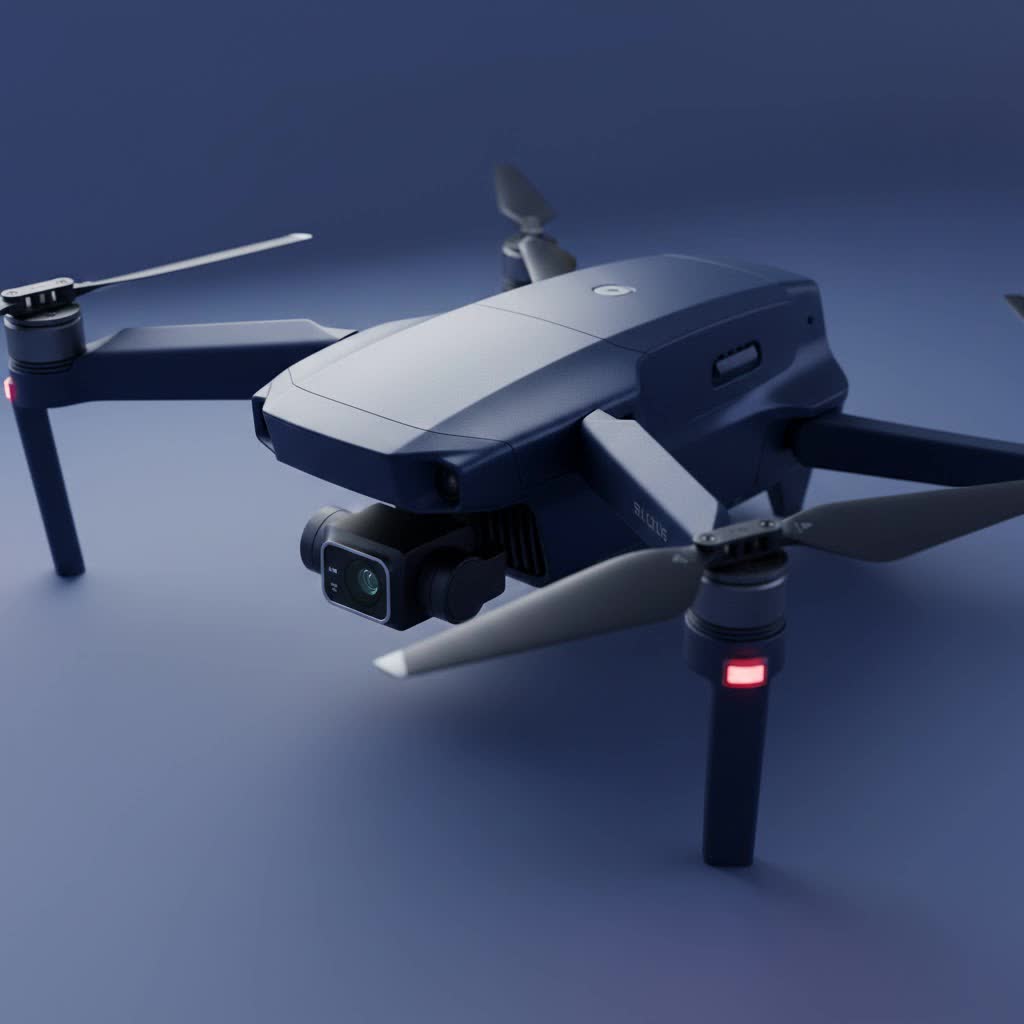
Whether you’re an athlete, a travel vlogger, or just someone who wants to capture life’s adventures from a new perspective, understanding how these intelligent drones work is the first step toward unlocking their incredible potential.
What Exactly is a ‘Drone That Follows You’?
A “drone that follows you” is an unmanned aerial vehicle (UAV) equipped with an autonomous flight mode designed to track and film a moving subject, typically the pilot. Instead of you manually controlling the drone’s every movement with the joysticks, you select a target (yourself), and the drone’s onboard intelligence takes over. It maintains a set distance and altitude while keeping the camera centered on you, acting as your personal, automated camera crew in the sky.
This capability is powered by a combination of sophisticated hardware and software, which generally falls into two main categories of tracking technology.
How Do Follow-Me Drones Actually Work?
Understanding the technology behind the magic helps you choose the right drone for your specific needs. The two primary methods drones use to follow a subject are GPS-based tracking and vision-based tracking.
GPS-Based Tracking
This is one of the earlier forms of follow-me technology. The drone doesn’t track you visually; instead, it tracks the GPS signal of the controller or a connected smartphone. You essentially create a digital tether between the drone and the controller.
- Pros: It’s effective over long distances and isn’t easily confused if the subject goes behind an object briefly.
- Cons: This method is less precise. The drone is following a GPS coordinate, not your exact body, so movements can be less fluid. More importantly, drones relying solely on GPS for tracking typically lack robust obstacle avoidance, making them unsuitable for environments with trees, buildings, or varied terrain.
|
Our Picks for the Best Drone in 2026
As an Amazon Associate I earn from qualifying purchases.
|
||
| Num | Product | Action |
|---|---|---|
| 1 | DJI Mini 5 Pro Fly More Combo with DJI RC 2, Drone with Camera, 1-Inch CMOS, 4K Drone for Beginners with Omnidirectional Obstacle Sensing, ActiveTrack 360°, 225° Gimbal Rotation, 3 Batteries |

|
| 2 | LỖI |
|
| 3 | DJI Neo, Mini Drone with 4K UHD Camera for Adults, 135g Self Flying Drone that Follows You, Palm Takeoff, Subject Tracking, QuickShots, Stabilized Video, Built-In Propeller Guard (Controller-Free) |
|
| 4 | DJI Neo Three-Battery Combo, Mini Drone with 4K UHD Camera for Adults, 135g Self Flying Drone that Follows You, Palm Takeoff, Subject Tracking, QuickShots, Stabilized Video (Controller-Free) |
|
| 5 | DJI Mini 3 (DJI RC), Lightweight 3x Mechanical Gimbal Drones with Camera for Adults 4K, 38-min Flight Time, up to 32800ft (10km) Video Transmission, Vertical Shooting, GPS Auto Return Integrated |
|
| 6 | Drone with Camera 1080P HD FPV Foldable Drone for Adults and Beginners, RC Quadcopter with Gravity Control, One Key Take Off/Land, Optical Flow Positioning, 360° Flip, 3 Speed Mode, Waypoint Fly Grey |
|
| 7 | Drone with Camera for Adults, 2K HD FPV Drones with Upgrade Altitude Hold, One-Key Take Off/Landing, Speed Adjustment, Headless Mode, 2 Batteries, Toys Gifts for Teen Boys Girls, Beginner |
|
| 8 | Drone with Camera - Drones for Adults, with 2 Batteries, Carrying Case, Propellers, 1080P HD Foldable Drone with Stable Hover, Trajectory Flight, Gravity Control, One Key Take Off/Land, 3D Flip |
|
| 9 | Drone with 1080P Camera for Beginners and Adults, Foldable Remote Control Quadcopter with Voice Control, Gestures Selfie, Altitude Hold, One Key Start, 3D Flips, 2 Batteries, Toy for Beginners |
|
| 10 | DJI Mini 3 Fly More Combo (DJI RC), Drones with Camera for Adults 4K, 3 Batteries for 114-min Flight Time, Vertical Shooting, 32800ft (10km) Video Transmission, Lightweight Mini Drone for Beginners |
|
Vision-Based Tracking (ActiveTrack)
This is the more advanced and common technology found in modern consumer drones. The drone uses its onboard cameras and sophisticated AI algorithms to recognize and lock onto a subject. You can typically draw a box around yourself or your vehicle on the controller’s screen, and the drone’s “eyes” will keep you in the frame.
- Pros: It’s incredibly precise, allowing for smooth, cinematic tracking of the subject’s exact movements. This system is paired with advanced obstacle avoidance sensors, enabling the drone to intelligently navigate complex environments without crashing.
- Cons: The drone can potentially lose the subject if they move too fast, are obscured for an extended period, or if the lighting conditions change dramatically.
Expert Tip: “The biggest mistake new pilots make is trusting the automation completely from day one,” notes veteran drone pilot and RVSWS expert, David Chen. “Learn to fly manually first. The ‘follow me’ feature is your co-pilot, not the captain. You are always the one in command.”
Top Picks: The Best Drones That Follow You in 2025
The market is full of options, but a few models stand out for their reliability, camera quality, and intelligent tracking features.
DJI Mavic 3 Pro: The Cinematographer’s Choice
For those who demand the absolute best image quality, the Mavic 3 Pro is in a class of its own. Its advanced ActiveTrack 5.0 system uses data from multiple sensors to create a more stable and reliable tracking experience, even in challenging conditions. It can predict a subject’s path and continue tracking even if they are temporarily obstructed.
- Best for: Professionals and serious content creators.
- Key Features: Tri-camera system for creative flexibility, omnidirectional obstacle sensing, and industry-leading image quality.
Skydio 2+: The Autonomy King
While DJI has made huge strides, Skydio built its reputation on having the most intelligent and reliable autonomous flight system on the market. The Skydio 2+ excels at tracking subjects through incredibly complex environments, like dense forests, making it the top choice for action sports enthusiasts. Its AI is simply unparalleled when it comes to dodging obstacles at speed.
- Best for: Mountain bikers, skiers, and anyone moving through cluttered environments.
- Key Features: World-class AI-powered obstacle avoidance, 360-degree subject tracking.
DJI Air 3: The All-Rounder
The DJI Air 3 hits the sweet spot between performance, portability, and price. It inherits many of the advanced tracking features from its more expensive Mavic cousins but in a more compact package. Its omnidirectional obstacle sensing and reliable ActiveTrack system make it a fantastic and versatile drone that follows you for almost any situation.
- Best for: Hobbyists, travelers, and prosumers.
- Key Features: Dual-camera system, long flight time, and a great balance of features for the price.
DJI Mini 4 Pro: The Compact Powerhouse
It’s amazing how much technology is packed into this sub-250g drone. The Mini 4 Pro brings high-end features like omnidirectional obstacle sensing and a surprisingly robust ActiveTrack 360° to an ultra-portable format. This makes it perfect for travelers and beginners who want reliable follow-me capabilities without the bulk.
- Best for: Beginners, solo travelers, and casual users.
- Key Features: Lightweight design (no registration required in many regions), excellent camera, and powerful tracking features for its size.
Key Features to Consider When Buying a Follow-Me Drone
When you’re ready to purchase a drone that follows you, keep these crucial factors in mind:
- Tracking Accuracy and Reliability: How well does the drone stick with the subject? Does it lose the lock easily? Look for reviews that specifically test the follow-me performance in real-world scenarios.
- Obstacle Avoidance System: This is non-negotiable for a follow-me drone. Look for omnidirectional (360-degree) sensing for the best protection against crashes.
- Flight Time and Battery Life: Tracking modes can drain the battery. Aim for a drone with at least 30 minutes of advertised flight time to give yourself a decent window for filming.
- Camera Quality: What’s the point of perfect tracking if the video is poor? Consider the resolution (4K is the standard), sensor size, and color science.
- Range: While you should always keep the drone in your line of sight, having a strong connection over a good distance provides a safety buffer.
- Portability and Weight: If you plan to hike or travel with your drone, a lighter, more compact model like the DJI Mini 4 Pro will be much more convenient.
How to Use Your Follow-Me Drone Safely and Effectively
Getting a great shot is important, but flying safely is paramount. Here is a pre-flight checklist to follow:
- Scout Your Location: Before you even launch, walk the area. Look for potential hazards like power lines, thin tree branches, or sudden changes in elevation that the drone’s sensors might miss.
- Understand Your Drone’s Limitations: Not all obstacle avoidance systems are created equal. Know if your drone can see objects above it, or if it struggles with small branches or wires.
- Start in an Open Area: For your first few flights, practice in a wide-open field. This gives you plenty of room for error as you learn how the drone behaves.
- Always Maintain Visual Line of Sight (VLOS): This is a legal requirement in most countries. You must be able to see your drone at all times to be able to take over manually if the automation fails.
- Be Aware of Local Regulations: Know the rules. Are you in a no-fly zone? Are you flying over people? A quick check of local aviation authority rules can save you a lot of trouble.
Frequently Asked Questions (FAQ)
What is the best drone that follows you for beginners?
The DJI Mini 4 Pro is an excellent choice for beginners. Its intuitive controls, robust safety features, lightweight design, and highly capable follow-me modes provide a fantastic user experience without being overwhelming.
Can a drone follow me without a controller?
Some specialized drones, like the Skydio, can be launched and controlled entirely through a smartphone app, with the drone tracking a beacon device or using its vision system. However, most drones require the controller to be on and connected for the GPS-based tracking to function.
Do all drones have a follow-me mode?
No, not all drones have this feature. It is typically found in mid-to-high-end consumer drones that have the necessary GPS, camera sensors, and processing power to perform autonomous flight tasks safely. Cheaper, entry-level drones usually lack this capability.
How fast can a follow-me drone fly?
This depends on the model, but most high-quality drones can track subjects moving at speeds of 25-40 mph (40-65 km/h). Drones like the Skydio 2+ are specifically designed for high-speed action sports tracking.
What happens if the drone loses me?
Most modern drones have a pre-set safety protocol. If the drone loses the visual lock or the controller signal, it will typically hover in place for a moment to try and re-acquire the subject. If it fails, it will initiate its “Return to Home” (RTH) function, flying back to its original takeoff point.
Your Personal Aerial Videographer Awaits
The ability to have a drone that follows you is no longer a feature reserved for Hollywood film crews. It is an accessible, powerful, and fun tool that can elevate the way you capture and share your experiences. By understanding the technology, choosing a model that fits your needs, and always prioritizing safety, you can unlock a new world of creative possibilities. So get out there, explore, and let your drone tell your story from a breathtaking new perspective.
