The world of unmanned aerial vehicles (UAVs) has expanded far beyond the small, consumer-grade quadcopters many people are familiar with. Today, a new class of aircraft is taking to the skies: the Large Drone. These powerful machines are not just bigger; they are purpose-built for heavy-duty tasks that are transforming entire industries. From delivering critical medical supplies to revolutionizing agriculture, large drones are proving that when it comes to aerial capability, size matters. As the technology matures, understanding these heavy-lift platforms is essential for professionals looking to leverage their incredible potential.
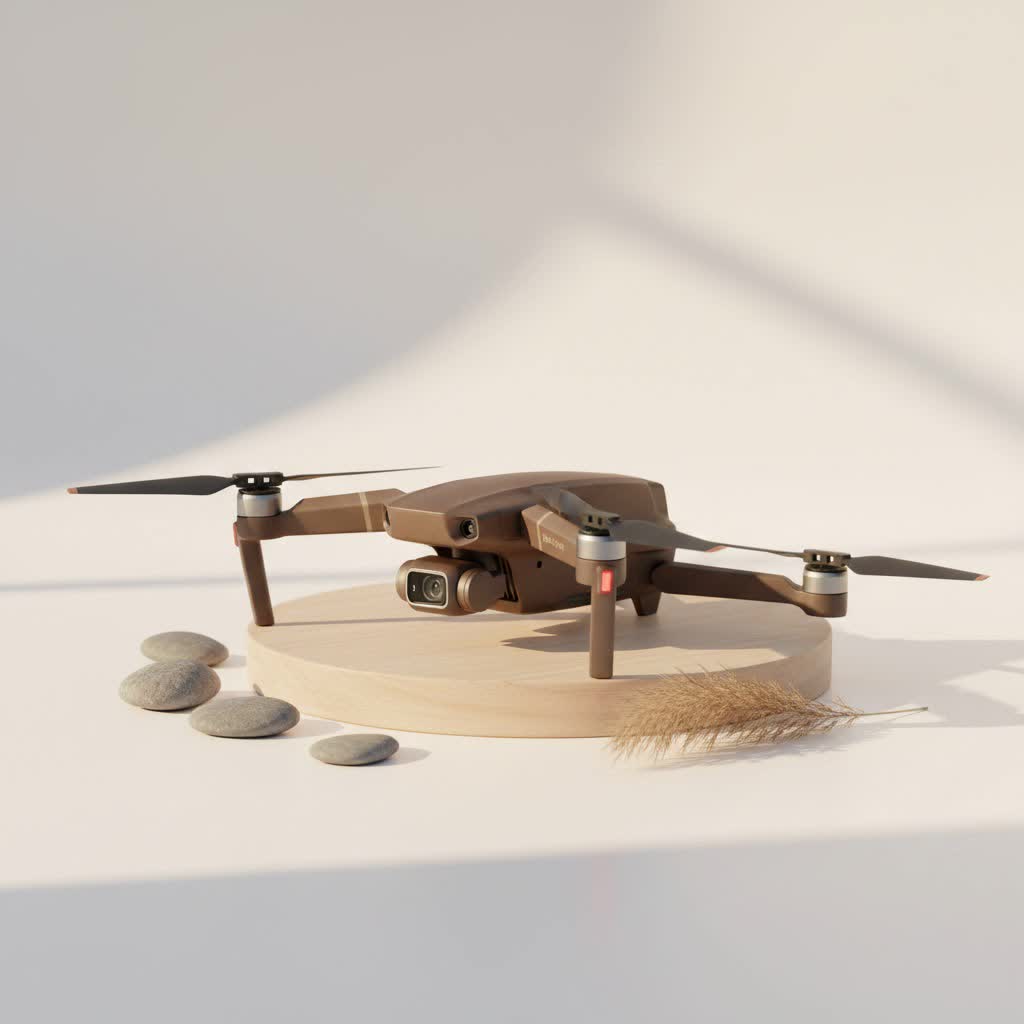
At RVSWS, we’ve spent over a decade working with every class of drone imaginable, and the rise of the large drone is one of the most exciting developments we’ve witnessed. This guide will walk you through everything you need to know about these impressive machines, from their core applications to the regulations that govern their use.
What Officially Defines a Large Drone?
While the term “large” can be subjective, regulatory bodies provide a clear definition. In the United States, the Federal Aviation Administration (FAA) categorizes any unmanned aircraft weighing 55 pounds (approximately 25 kg) or more as a large drone. This weight includes the aircraft itself plus anything it is carrying, such as cargo, sensors, or spray tanks. Operating a drone in this category moves you beyond the standard Part 107 rules and into a more complex regulatory landscape requiring specific exemptions and certifications.
Key Characteristics of Heavy-Lift Drones
Beyond just weight, several features distinguish a large drone from its smaller counterparts:
- Payload Capacity: This is their primary advantage. While a hobby drone might carry a small camera, a large drone is designed to lift significant weight, ranging from 20 lbs to over 500 lbs, depending on the model.
- Size and Wingspan: These drones often have a considerable physical footprint, with multi-rotor designs featuring eight or more propellers and fixed-wing models boasting expansive wingspans for greater endurance.
- Power Source: Many rely on high-capacity lithium-polymer (LiPo) batteries, but to achieve longer flight times with heavy loads, gas-electric hybrid systems or even pure gas engines are becoming more common.
- Advanced Autonomy: Large drones are equipped with sophisticated flight controllers, GPS, and often LiDAR or other sense-and-avoid technologies to ensure safe and precise operation, especially for beyond-visual-line-of-sight (BVLOS) missions.
|
Our Picks for the Best Drone in 2026
As an Amazon Associate I earn from qualifying purchases.
|
||
| Num | Product | Action |
|---|---|---|
| 1 | DJI Neo, Mini Drone with 4K UHD Camera for Adults, 135g Self Flying Drone that Follows You, Palm Takeoff, Subject Tracking, QuickShots, Stabilized Video, Built-In Propeller Guard (Controller-Free) |

|
| 2 | DJI Mini 3 Fly More Combo (DJI RC), Drones with Camera for Adults 4K, 3 Batteries for 114-min Flight Time, Vertical Shooting, 32800ft (10km) Video Transmission, Lightweight Mini Drone for Beginners |
|
| 3 | Drone with Camera 1080P HD FPV Foldable Drone for Adults and Beginners, RC Quadcopter with Gravity Control, One Key Take Off/Land, Optical Flow Positioning, 360° Flip, 3 Speed Mode, Waypoint Fly Grey |
|
| 4 | LỖI |
|
| 5 | DJI Neo Three-Battery Combo, Mini Drone with 4K UHD Camera for Adults, 135g Self Flying Drone that Follows You, Palm Takeoff, Subject Tracking, QuickShots, Stabilized Video (Controller-Free) |
|
| 6 | Drone with Camera - Drones for Adults, with 2 Batteries, Carrying Case, Propellers, 1080P HD Foldable Drone with Stable Hover, Trajectory Flight, Gravity Control, One Key Take Off/Land, 3D Flip |
|
| 7 | DJI Mini 5 Pro Fly More Combo with DJI RC 2, Drone with Camera, 1-Inch CMOS, 4K Drone for Beginners with Omnidirectional Obstacle Sensing, ActiveTrack 360°, 225° Gimbal Rotation, 3 Batteries |
|
| 8 | Drone with Camera for Adults, 2K HD FPV Drones with Upgrade Altitude Hold, One-Key Take Off/Landing, Speed Adjustment, Headless Mode, 2 Batteries, Toys Gifts for Teen Boys Girls, Beginner |
|
| 9 | Drone with 1080P Camera for Beginners and Adults, Foldable Remote Control Quadcopter with Voice Control, Gestures Selfie, Altitude Hold, One Key Start, 3D Flips, 2 Batteries, Toy for Beginners |
|
| 10 | DJI Mini 3 (DJI RC), Lightweight 3x Mechanical Gimbal Drones with Camera for Adults 4K, 38-min Flight Time, up to 32800ft (10km) Video Transmission, Vertical Shooting, GPS Auto Return Integrated |
|
Top Applications: Where Large Drones Dominate
The ability to carry heavy and specialized payloads unlocks a vast range of commercial and industrial applications. These drones are not for taking selfies; they are workhorses designed for efficiency, safety, and scale.
Logistics and Cargo Delivery
Perhaps the most talked-about application is autonomous cargo transport. Companies are actively developing and deploying large drone fleets to move goods faster and more efficiently than ground transportation, especially in remote or hard-to-reach areas. This includes:
- Medical Deliveries: Transporting blood, vaccines, and medical equipment to rural clinics.
- E-commerce: Moving packages between distribution centers or directly to customers.
- Industrial Logistics: Ferrying spare parts and equipment to offshore oil rigs, wind farms, or mining sites.
Agriculture and Crop Management
Precision agriculture has been revolutionized by drones, and large models take it a step further. A large drone can carry massive tanks of liquid, making them ideal for:
- Crop Spraying: Efficiently and accurately applying pesticides, herbicides, or fertilizers over vast fields, reducing chemical usage and soil compaction from tractors.
- Seeding: Dispersing seeds for reforestation projects or planting cover crops.
- Field Surveying: Carrying advanced multispectral and LiDAR sensors to gather detailed data on crop health and soil conditions over hundreds of acres in a single flight.
“The efficiency gains are undeniable,” states agricultural tech expert Dr. Eleanor Vance. “A large agricultural drone can cover in one hour what might take a ground crew an entire day, all while applying inputs with pinpoint accuracy. It’s a game-changer for sustainable farming.”
Industrial Inspection and Surveying
For industries like energy, construction, and telecommunications, inspecting vast and often dangerous infrastructure is a critical task. Large drones provide a safer and more cost-effective solution. They can carry high-resolution cameras, thermal sensors, and LiDAR scanners to perform detailed inspections of:
- Power lines and wind turbines
- Pipelines and railways
- Bridges and building facades
- Large-scale construction sites for progress monitoring
Navigating the Rules: Licensing for a Large Drone
Flying a drone that weighs 55 lbs or more is a serious responsibility, and the regulations reflect that. You cannot simply use a standard Part 107 certificate. Instead, operators must navigate a more rigorous certification process with the FAA.
The primary pathway is through an exemption under Section 44807, which allows for the operation of unmanned aircraft over 55 lbs. This process involves:
- Petition for Exemption: You must formally petition the FAA, demonstrating that your proposed operation can be conducted safely.
- Aircraft Certification: The drone itself may need to be certified as airworthy, a process that involves detailed documentation of its design, manufacturing, and maintenance procedures.
- Pilot Certification: The remote pilot in command often needs higher qualifications than a standard Part 107 license, potentially including a private pilot license and specific training on the aircraft type.
- Certificate of Waiver or Authorization (COA): This is typically required to define the specific conditions under which you are permitted to operate, such as location, altitude, and time of day.
Key Factors When Choosing a Large Drone
If your organization is considering investing in a heavy-lift drone, the decision requires careful evaluation of your specific needs.
| Feature | What to Consider | Impact on Operations |
|---|---|---|
| Payload Capacity | What is the maximum and optimal weight you need to carry? | This is the primary driver. Never exceed the manufacturer’s payload limit. |
| Flight Time | How long does the drone need to stay in the air with the intended payload? | Longer endurance means greater efficiency and fewer battery swaps. Hybrid systems often outperform all-electric models here. |
| Operational Range | How far does the drone need to travel? Are BVLOS operations required? | This dictates the command-and-control link technology needed (e.g., radio, 4G/5G, satellite). |
| Cost & ROI | What is the total cost of ownership, including the aircraft, training, and maintenance? | A large drone is a significant capital investment. A clear return-on-investment calculation is crucial. |
| Durability | Can the drone operate in your typical weather conditions (wind, rain, temperature)? | Industrial drones are built to be rugged, but always check the Ingress Protection (IP) rating. |
The Future is Big: What’s Next for Heavy-Lift Drones?
The technology behind the large drone is advancing rapidly. We can expect to see several key trends in the coming years:
- Increased Autonomy: AI-powered flight systems will enable more complex missions with less human intervention, such as automatically detecting and avoiding obstacles in cluttered environments.
- Greater Integration: Drones will become fully integrated into a company’s logistics and data management systems, operating as part of a seamless, automated workflow.
- Urban Air Mobility (UAM): The largest drones are paving the way for passenger-carrying air taxis, which are currently in development and testing around the world.
- Standardized Regulations: As the technology becomes more widespread, regulatory bodies will likely create more streamlined and standardized certification pathways for large drones and their operators.
Frequently Asked Questions (FAQ)
How much weight can a large drone carry?
The payload capacity varies widely. Agricultural drones often carry 40-100 lbs (20-50 liters) of liquid, while specialized cargo drones are being developed to lift over 500 lbs. Always check the specifications for the specific model.
Do you need a special license to fly a large drone?
Yes. In the U.S., any drone weighing 55 lbs or more requires an FAA exemption (like Section 44807) and specific authorizations, which is a more demanding process than the standard Part 107 license for smaller drones.
What is the flight time of a heavy-lift drone?
Flight time is heavily dependent on payload. An unloaded drone might fly for over an hour, but with a maximum payload, the flight time for a battery-powered model could be closer to 15-30 minutes. Hybrid gas-electric systems can extend this significantly.
How much does a large industrial drone cost?
The cost can range from $20,000 for a basic agricultural model to well over $100,000 for a sophisticated industrial inspection or long-range cargo drone. This does not include the cost of sensors, software, or training.
What is the biggest challenge in operating large drones?
Beyond the complex regulations, the primary challenge is ensuring safety. The kinetic energy of a heavy aircraft poses significant risks, making robust fail-safes, rigorous maintenance, and extensive pilot training absolutely critical for safe operation.
Conclusion
The large drone represents a major leap forward in aviation technology. These powerful machines are more than just scaled-up versions of their smaller cousins; they are highly specialized tools solving real-world problems and creating immense value across industries. While the path to operation is more complex, the rewards in efficiency, safety, and capability are unmatched. As regulations evolve and technology improves, these heavy-lift platforms will become an increasingly common and indispensable part of our skies, truly shaping the future of work and logistics.
