The world of land surveying, a discipline built on precision and meticulous measurement, is undergoing a dramatic transformation. For centuries, it involved teams of surveyors on the ground with tools like theodolites and total stations, a process that was often time-consuming, costly, and physically demanding. Today, the hum of rotors is replacing the weary footsteps of field crews. The practice of Drone Surveying has ascended from a niche technology to an indispensable tool, leveraging Unmanned Aerial Vehicles (UAVs) to capture highly accurate geospatial data from the sky, fundamentally changing how we map, measure, and manage our world.
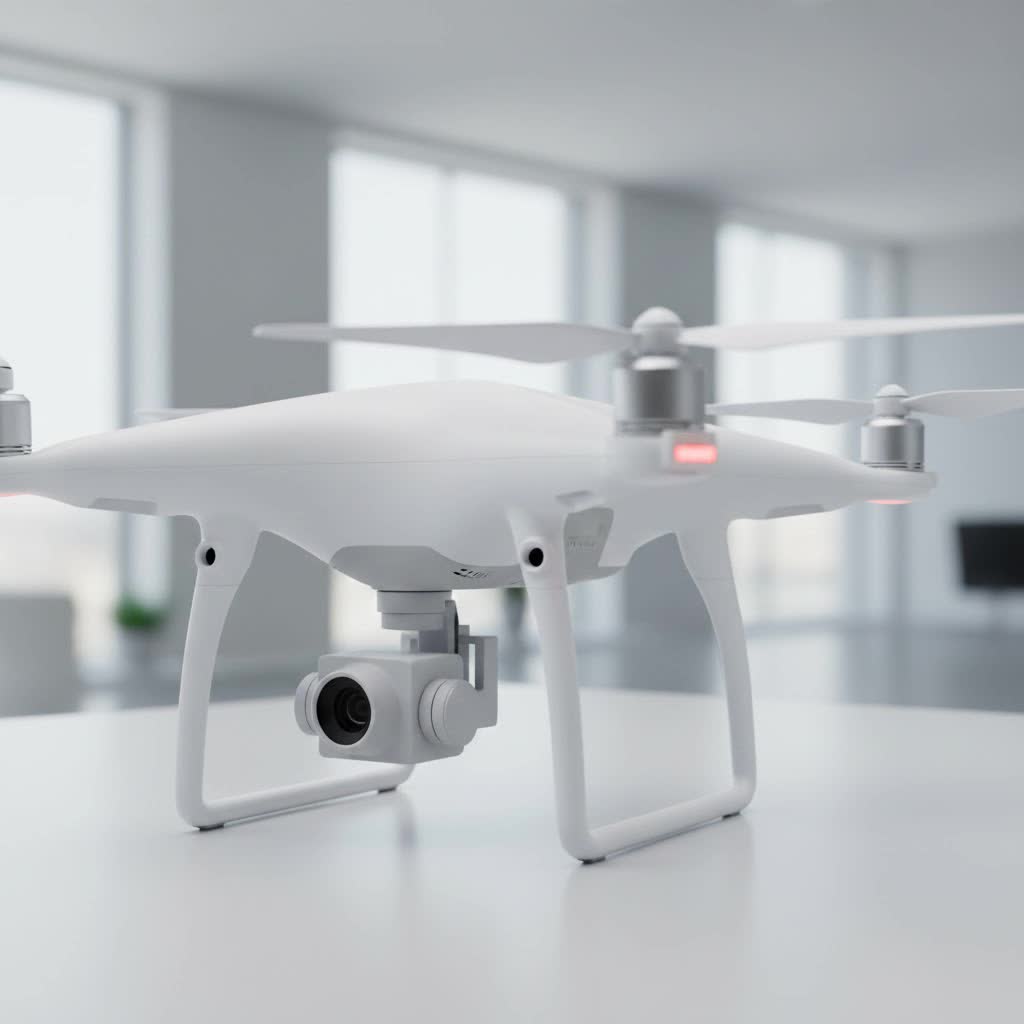
What Exactly is Drone Surveying?
At its core, drone surveying is the use of a drone equipped with high-resolution cameras or advanced sensors, like LiDAR, to capture aerial data of a specific area. This isn’t simply taking pictures from above; it’s a sophisticated process of data collection that, through specialized software, translates thousands of images or data points into detailed, measurable outputs. The primary technologies powering this are:
- Photogrammetry: This is the science of making measurements from photographs. In a drone survey, the UAV flies a pre-planned grid pattern over a site, capturing hundreds or thousands of overlapping images. Photogrammetry software then analyzes these images, identifies common points, and stitches them together to create a geographically accurate, high-resolution 3D map or model.
- LiDAR (Light Detection and Ranging): Some survey drones are equipped with LiDAR sensors. These sensors emit rapid pulses of laser light towards the ground. By measuring the time it takes for each pulse to reflect, the system calculates a precise distance. This process creates a “point cloud,” an incredibly detailed 3D data set that can even penetrate vegetation to map the true ground surface.
From these raw data captures, we can generate a wealth of valuable assets, including 2D orthomosaic maps, 3D point clouds, Digital Elevation Models (DEMs), and detailed topographic contour lines.
Why Use Drones for Surveying? The Key Benefits
The shift from traditional methods to drone surveying isn’t just about new gadgets; it’s about tangible advantages that impact project timelines, budgets, and safety protocols. The benefits are so significant that they are reshaping industry standards.
Unmatched Speed and Efficiency
|
Our Picks for the Best Drone in 2026
As an Amazon Associate I earn from qualifying purchases.
|
||
| Num | Product | Action |
|---|---|---|
| 1 | Drone with Camera 1080P HD FPV Foldable Drone for Adults and Beginners, RC Quadcopter with Gravity Control, One Key Take Off/Land, Optical Flow Positioning, 360° Flip, 3 Speed Mode, Waypoint Fly Grey |

|
| 2 | Drone with 1080P Camera for Beginners and Adults, Foldable Remote Control Quadcopter with Voice Control, Gestures Selfie, Altitude Hold, One Key Start, 3D Flips, 2 Batteries, Toy for Beginners |
|
| 3 | Drone with Camera - Drones for Adults, with 2 Batteries, Carrying Case, Propellers, 1080P HD Foldable Drone with Stable Hover, Trajectory Flight, Gravity Control, One Key Take Off/Land, 3D Flip |
|
| 4 | DJI Neo Three-Battery Combo, Mini Drone with 4K UHD Camera for Adults, 135g Self Flying Drone that Follows You, Palm Takeoff, Subject Tracking, QuickShots, Stabilized Video (Controller-Free) |
|
| 5 | Drone with Camera for Adults, 2K HD FPV Drones with Upgrade Altitude Hold, One-Key Take Off/Landing, Speed Adjustment, Headless Mode, 2 Batteries, Toys Gifts for Teen Boys Girls, Beginner |
|
| 6 | DJI Mini 5 Pro Fly More Combo with DJI RC 2, Drone with Camera, 1-Inch CMOS, 4K Drone for Beginners with Omnidirectional Obstacle Sensing, ActiveTrack 360°, 225° Gimbal Rotation, 3 Batteries |
|
| 7 | DJI Neo, Mini Drone with 4K UHD Camera for Adults, 135g Self Flying Drone that Follows You, Palm Takeoff, Subject Tracking, QuickShots, Stabilized Video, Built-In Propeller Guard (Controller-Free) |
|
| 8 | LỖI |
|
| 9 | DJI Mini 3 Fly More Combo (DJI RC), Drones with Camera for Adults 4K, 3 Batteries for 114-min Flight Time, Vertical Shooting, 32800ft (10km) Video Transmission, Lightweight Mini Drone for Beginners |
|
| 10 | DJI Mini 3 (DJI RC), Lightweight 3x Mechanical Gimbal Drones with Camera for Adults 4K, 38-min Flight Time, up to 32800ft (10km) Video Transmission, Vertical Shooting, GPS Auto Return Integrated |
|
One of the most profound benefits is the dramatic reduction in time. A land survey that might take a team weeks to complete on foot can often be accomplished by a drone in a matter of hours. A single flight can cover hundreds of acres, capturing data far more rapidly than any ground-based crew. This speed accelerates project timelines, allowing for faster decision-making and quicker project turnaround.
Significant Cost Reduction
By reducing fieldwork hours and minimizing the need for large survey teams, drones offer substantial cost savings. The operational costs of a UAV are significantly lower than mobilizing a full ground crew with expensive, heavy equipment. This efficiency makes frequent surveying—for progress monitoring on construction sites, for instance—not just possible but economically viable.
Enhanced Safety
Surveying can be hazardous. Job sites often include difficult-to-reach areas, unstable terrain, steep slopes, or active industrial operations. Drones eliminate the need for human surveyors to physically access these dangerous locations. By collecting data from a safe distance, UAVs drastically reduce the risk of accidents and injuries, creating a safer working environment for everyone involved.
Superior Data Accuracy and Detail
Modern survey drones, especially those equipped with RTK (Real-Time Kinematic) or PPK (Post-Processed Kinematic) GPS technology, can achieve survey-grade accuracy down to the centimeter level. The sheer volume of data points collected provides a far more comprehensive and detailed picture than traditional methods might capture. This high-density data leads to richer 3D models and more precise measurements, giving engineers and project managers greater confidence in the results.
“With traditional surveying, you collect data points one by one. A drone, in a single flight, captures millions of data points. You’re not just getting a sample of the site; you’re getting the entire site in high-resolution detail. It’s a game-changer for accuracy.” – Dr. Alistair Finch, RVSWS Geospatial Analyst
How Does Drone Surveying Work?
While the technology is complex, the workflow for a typical drone survey follows a logical three-step process, turning a flight into actionable intelligence.
Step 1: Mission Planning
Before the drone ever leaves the ground, the mission is meticulously planned. Using specialized software, the surveyor defines the project area, sets the required resolution (which determines the flight altitude), and plans the automated flight path—typically a grid pattern to ensure sufficient image overlap. Factors like terrain, weather conditions, and airspace regulations are all considered.
Step 2: Data Acquisition (The Flight)
Once on-site, the surveyor may place Ground Control Points (GCPs)—marked targets with known coordinates—to further enhance accuracy. The drone is then launched and executes the pre-programmed flight path autonomously. During its flight, it captures the necessary data, whether it’s high-resolution images for photogrammetry or laser pulses from a LiDAR sensor.
Step 3: Data Processing
After the flight, the collected data is uploaded to a powerful processing engine. This is where the magic happens. The software analyzes the data, geotags each image or point, and constructs the final outputs. This can take anywhere from a few hours to a day, depending on the size of the dataset. The result is a suite of digital assets ready for analysis, measurement, and integration into design software like CAD or GIS.
Common Applications of Drone Surveying
The versatility of drone surveying has led to its adoption across a wide range of industries, each leveraging the technology for unique purposes.
- Construction: Drones are used for everything from initial site surveys and topographic mapping to monitoring construction progress, calculating earthwork volumes (cut/fill analysis), and conducting as-built surveys.
- Mining: In mining operations, drones provide a safe and efficient way to map stockpiles, measure volumes, monitor pit walls, and plan blast operations.
- Agriculture: Farmers and agronomists use drones for crop monitoring, assessing plant health with multispectral sensors, and creating precise elevation maps for irrigation and drainage planning.
- Land Management and Environmental Monitoring: Drones help in monitoring land use changes, tracking erosion, mapping floodplains, and conducting wildlife habitat assessments without disturbing the natural environment.
Frequently Asked Questions (FAQ)
What is the difference between drone surveying and traditional surveying?
Traditional surveying relies on ground-based equipment and physical measurement by surveyors on foot, collecting individual data points. Drone surveying uses an aerial platform to capture millions of data points quickly and remotely, creating a comprehensive digital model of the entire area.
How accurate is drone surveying?
With professional-grade equipment, including RTK/PPK enabled drones and the proper use of Ground Control Points (GCPs), drone surveying can achieve accuracy down to a few centimeters, making it suitable for most commercial and engineering applications.
What is LiDAR in drone surveying?
LiDAR is a remote sensing method that uses pulsed laser light to measure variable distances to the Earth. In drone surveying, a LiDAR sensor can create highly detailed 3D point clouds and is particularly effective at mapping ground surfaces beneath vegetation canopies.
Do you need a license for drone surveying?
Yes, in most countries, operating a drone for commercial purposes, including surveying, requires the pilot to be certified or licensed by the national aviation authority (such as the FAA in the United States).
How much does drone surveying cost?
The cost can vary widely depending on the size and complexity of the site, the required accuracy, and the type of deliverables. However, it is generally more cost-effective than traditional surveying methods, especially for large areas, due to the significant reduction in time and manpower.
The Future of Surveying is in the Sky
Drone surveying is no longer a futuristic concept; it is the present reality. By delivering data faster, safer, and more affordably than ever before, this technology has firmly established its place as an essential tool in the surveyor’s toolkit. As drone and sensor technology continues to advance, its capabilities will only expand, promising even greater accuracy, efficiency, and insight. For professionals in construction, mining, agriculture, and beyond, embracing drone surveying is not just about keeping up with trends—it’s about unlocking a smarter, more data-driven way to build and manage the world around us.
