When most people picture a drone, they imagine a quadcopter—a nimble, four-rotor aircraft that has become ubiquitous in photography and recreational flying. But in the world of professional unmanned aerial vehicles (UAVs), a more powerful and efficient design reigns supreme: the Helicopter Drone. These single-rotor aircraft are the workhorses of the sky, offering capabilities in flight time, payload capacity, and performance that multi-rotor systems often can’t match. As a 15-year veteran in the drone industry, I’m here to guide you through the fascinating mechanics and applications of these incredible machines.
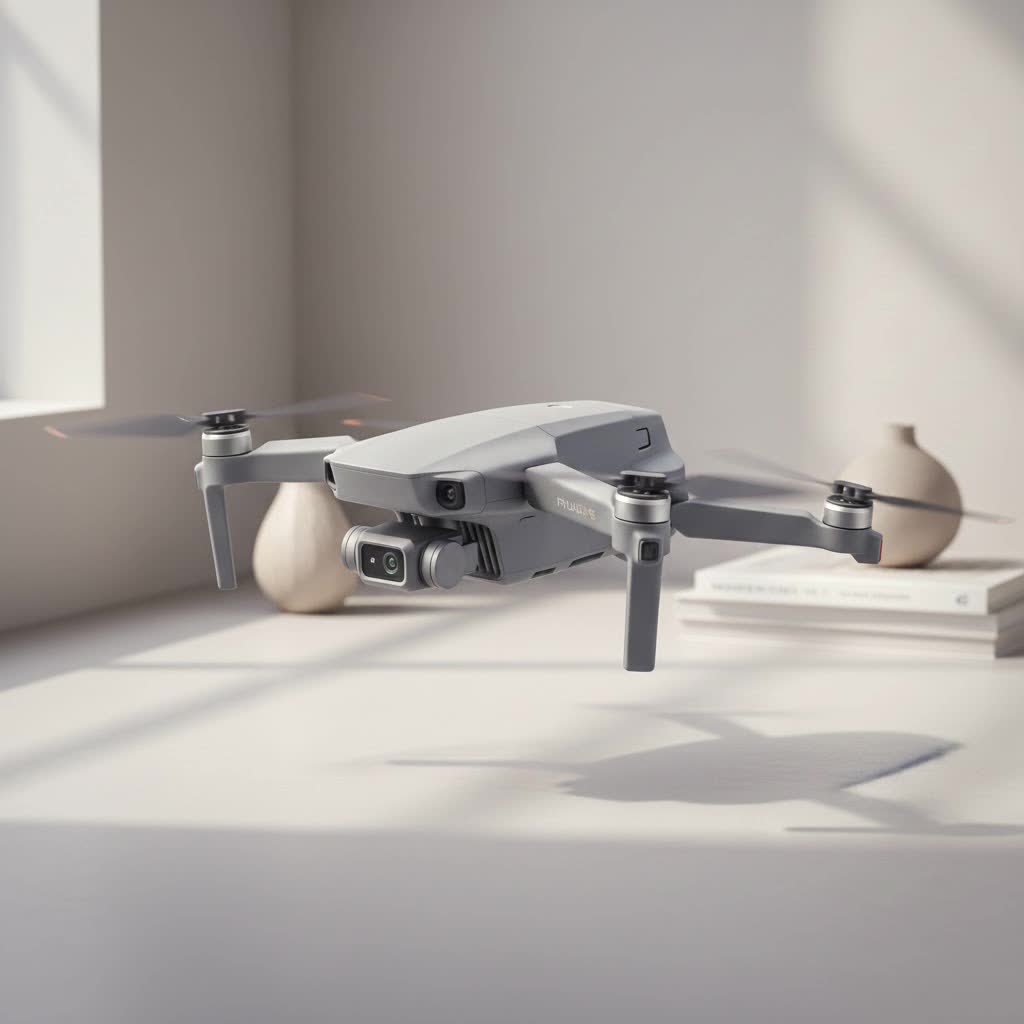
At RVSWS, we believe in empowering users with deep knowledge. A helicopter drone, at its core, operates much like a full-sized helicopter. It generates lift from a single, large main rotor and counteracts the resulting torque with a smaller tail rotor. This design is mechanically more complex than that of a quadcopter, but it provides significant aerodynamic advantages, making it the preferred choice for demanding industrial, agricultural, and logistical applications.
What’s the Difference: Helicopter Drone vs. Quadcopter?
Understanding the distinction between a single-rotor helicopter drone and a multi-rotor quadcopter is crucial to appreciating its unique strengths. While both are types of UAVs, their design principles lead to vastly different performance characteristics. A quadcopter relies on varying the speed of its four fixed-pitch propellers to control lift and direction. In contrast, a helicopter drone uses a collective and cyclic pitch system on its main rotor blades, allowing the pilot to change their angle of attack for incredibly precise and dynamic control.
“People are often surprised by the sheer power and efficiency of a helicopter drone. While quadcopters are fantastic for their stability and ease of use, single-rotor platforms are true feats of aerospace engineering, designed for endurance and heavy lifting,” notes Dr. Alistair Finch, an aerospace dynamics specialist.
Here’s a breakdown of the key differences:
| Feature | Helicopter Drone | Quadcopter Drone |
|---|---|---|
| Aerodynamic Efficiency | Very high; long blades create more lift with less energy. | Lower; multiple small rotors are less efficient. |
| Flight Time | Significantly longer, often exceeding an hour. | Typically shorter, averaging 20-30 minutes. |
| Payload Capacity | Superior; capable of carrying heavy equipment. | Limited to smaller cameras and sensors. |
| Wind Resistance | Excellent; handles strong winds with greater stability. | More susceptible to being pushed by gusts. |
| Complexity & Cost | High; mechanically complex and more expensive. | Lower; simpler design and more affordable. |
| Maintenance | Requires specialized knowledge and regular upkeep. | Easier to maintain with fewer moving parts. |
| Ease of Use | Steeper learning curve, requires more piloting skill. | Very easy for beginners to learn and fly. |
The Unmatched Advantages of a Helicopter Drone
The engineering behind a helicopter drone is what gives it a competitive edge in several critical areas. For commercial operators, these benefits translate directly into greater operational range, mission flexibility, and return on investment.
Unbeatable Endurance and Range
|
Our Picks for the Best Drone in 2026
As an Amazon Associate I earn from qualifying purchases.
|
||
| Num | Product | Action |
|---|---|---|
| 1 | Drone with Camera 1080P HD FPV Foldable Drone for Adults and Beginners, RC Quadcopter with Gravity Control, One Key Take Off/Land, Optical Flow Positioning, 360° Flip, 3 Speed Mode, Waypoint Fly Grey |

|
| 2 | Drone with Camera for Adults, 2K HD FPV Drones with Upgrade Altitude Hold, One-Key Take Off/Landing, Speed Adjustment, Headless Mode, 2 Batteries, Toys Gifts for Teen Boys Girls, Beginner |
|
| 3 | DJI Mini 3 (DJI RC), Lightweight 3x Mechanical Gimbal Drones with Camera for Adults 4K, 38-min Flight Time, up to 32800ft (10km) Video Transmission, Vertical Shooting, GPS Auto Return Integrated |
|
| 4 | Drone with Camera - Drones for Adults, with 2 Batteries, Carrying Case, Propellers, 1080P HD Foldable Drone with Stable Hover, Trajectory Flight, Gravity Control, One Key Take Off/Land, 3D Flip |
|
| 5 | Drone with 1080P Camera for Beginners and Adults, Foldable Remote Control Quadcopter with Voice Control, Gestures Selfie, Altitude Hold, One Key Start, 3D Flips, 2 Batteries, Toy for Beginners |
|
| 6 | DJI Neo, Mini Drone with 4K UHD Camera for Adults, 135g Self Flying Drone that Follows You, Palm Takeoff, Subject Tracking, QuickShots, Stabilized Video, Built-In Propeller Guard (Controller-Free) |
|
| 7 | LỖI |
|
| 8 | DJI Mini 5 Pro Fly More Combo with DJI RC 2, Drone with Camera, 1-Inch CMOS, 4K Drone for Beginners with Omnidirectional Obstacle Sensing, ActiveTrack 360°, 225° Gimbal Rotation, 3 Batteries |
|
| 9 | DJI Neo Three-Battery Combo, Mini Drone with 4K UHD Camera for Adults, 135g Self Flying Drone that Follows You, Palm Takeoff, Subject Tracking, QuickShots, Stabilized Video (Controller-Free) |
|
| 10 | DJI Mini 3 Fly More Combo (DJI RC), Drones with Camera for Adults 4K, 3 Batteries for 114-min Flight Time, Vertical Shooting, 32800ft (10km) Video Transmission, Lightweight Mini Drone for Beginners |
|
The primary advantage of a single-rotor design is its efficiency. The long, airfoil-shaped blades of a helicopter drone generate lift more effectively than the short propellers of a quadcopter. This means it can stay in the air for much longer on a single battery or tank of fuel, making it ideal for missions that cover large areas, such as agricultural surveys, pipeline inspections, and long-range mapping.
Heavy-Lifting Powerhouse
When it comes to carrying capacity, the helicopter drone is in a class of its own. Its powerful main rotor can lift substantial payloads, from high-resolution cinematic cameras and LiDAR scanners to agricultural spray tanks and delivery packages. This ability to carry heavy and specialized equipment opens up applications that are simply not feasible for most quadcopters.
Superior Performance in Tough Conditions
Thanks to its aerodynamic profile and sheer mass, a helicopter drone is far more stable in high winds than its multi-rotor counterparts. While a quadcopter may struggle and drift in gusty weather, a helicopter drone can hold its position and fly its intended path with greater authority, ensuring mission success even in challenging environments.
What Are Helicopter Drones Used For?
The unique capabilities of helicopter drones make them indispensable tools across a wide range of industries. They are not typically used for casual selfies but for serious work where performance and reliability are paramount.
Precision Agriculture
In farming, helicopter drones are used to spray crops with unparalleled precision. Their ability to carry large liquid payloads and generate a powerful downwash from the main rotor helps ensure that treatments penetrate the crop canopy effectively, reducing waste and environmental impact.
Surveying and Mapping
For large-scale topographical surveys and LiDAR mapping, endurance is key. A helicopter drone can cover vast tracts of land in a single flight, collecting high-resolution data for industries like mining, construction, and forestry without the need to constantly land and swap batteries.
Cinematography and Broadcasting
While smaller drones have revolutionized filmmaking, high-end productions often require heavier cinema cameras and lenses. Helicopter drones provide a stable, powerful platform capable of carrying this professional-grade equipment, capturing smooth, sweeping shots with cinematic quality.
Industrial Inspection and Cargo Delivery
From inspecting wind turbines and power lines to delivering critical medical supplies to remote areas, helicopter drones provide a fast, efficient, and safe solution. Their ability to fly long distances and carry significant weight makes them ideal for logistics and infrastructure maintenance.
Navigating the Challenges: What to Know Before You Fly
Despite their advantages, helicopter drones are not for everyone. Their complexity brings a steeper learning curve and greater responsibility. The mechanical systems, including the swashplate, linkages, and pitch controls, require a deeper understanding of aeronautics. Piloting one demands more skill and practice than flying a GPS-stabilized quadcopter, as the pilot is in much more direct control of the aircraft’s flight dynamics. Furthermore, the cost of acquisition and maintenance is significantly higher, placing them firmly in the professional and serious hobbyist categories.
Frequently Asked Questions (FAQ)
Are helicopter drones hard to fly?
Yes, they are considerably more challenging to fly than typical quadcopters. They require a good understanding of helicopter flight mechanics and demand more hands-on skill from the pilot, though modern flight controllers and stabilization systems have made them more accessible than older RC helicopters.
How much do helicopter drones cost?
The cost varies widely. Professional-grade helicopter drones designed for industrial applications can range from $20,000 to over $100,000, depending on their size, payload capacity, and onboard technology. High-end hobbyist models are less expensive but still represent a significant investment.
What is the longest flight time for a helicopter drone?
Many commercial helicopter drones can achieve flight times of over an hour. Some specialized gasoline-powered models can fly for several hours, making them suitable for extensive endurance missions far beyond the capability of battery-powered multi-rotors.
Are helicopter drones better than quadcopters?
One is not inherently “better” than the other; they are designed for different purposes. Quadcopters are better for portability, ease of use, and tasks in confined spaces. A helicopter drone is superior for missions requiring long flight times, heavy payloads, and stable performance in windy conditions.
The Future is Single-Rotor
While quadcopters have captured the public’s imagination, the true evolution of commercial drone applications lies with powerful platforms like the helicopter drone. Their unparalleled efficiency, endurance, and lifting capability make them the go-to solution for the most demanding jobs. As technology advances, these incredible machines will continue to play a vital role in shaping industries, pushing the boundaries of what’s possible in the world of unmanned aviation. At RVSWS, we’re excited to see where this flight path leads.
