When it comes to the world of consumer drones, DJI stands in a class of its own. For over a decade, they have consistently pushed the boundaries of what’s possible, packing professional-grade features into increasingly compact and user-friendly aircraft. If you’re looking to buy a flying camera, finding the Best Dji Drone is the perfect place to start. But with a lineup that caters to everyone from first-time flyers to Hollywood cinematographers, choosing the right one can feel overwhelming.
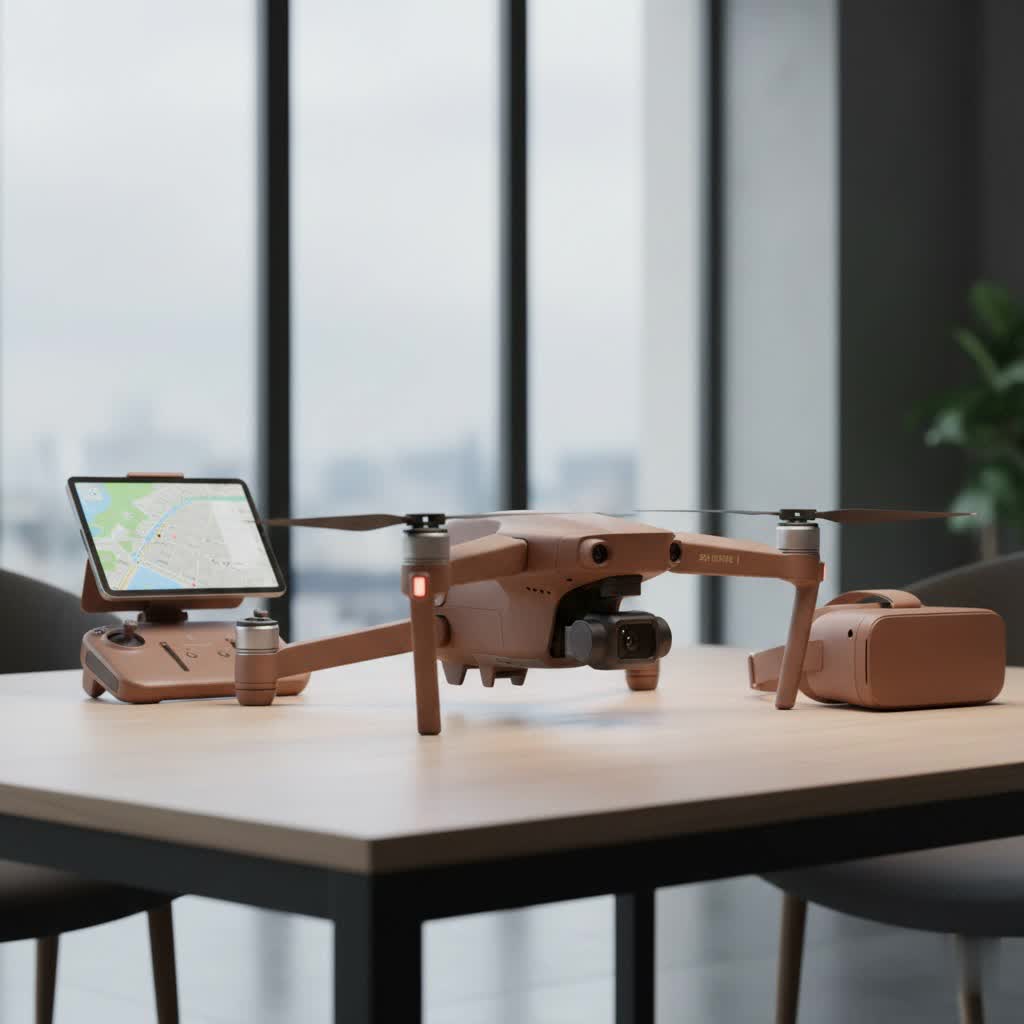
That’s where we come in. As seasoned drone pilots and creators at RVSWS, we’ve spent countless hours testing every model DJI has to offer. This guide will break down the entire lineup, helping you understand the key differences and pinpoint the perfect drone for your specific needs and budget. Whether you’re capturing family vacations, creating stunning content, or just having fun, your ideal aerial partner is here.
Understanding DJI’s Drone Lineup
First, it’s helpful to understand how DJI categorizes its main consumer drones. Each series is designed with a specific user in mind.
- Mini Series: These are the featherweights. Weighing under 250 grams, they are built for maximum portability and often sidestep the strictest drone regulations in many countries. They are perfect for beginners and travelers.
- Air Series: The all-rounders. The Air series strikes an incredible balance between portability, power, and camera quality. They are the ideal choice for ambitious hobbyists and semi-professionals who need more features than the Mini series offers.
- Mavic Series: This is DJI’s flagship lineup. Mavic drones boast the best camera systems, featuring larger sensors and multiple lenses. They are the go-to choice for serious photographers, videographers, and professionals who demand uncompromising image quality.
- FPV Series: Built for thrills. FPV (First-Person View) drones, like the Avata 2, offer an incredibly immersive flying experience using goggles. They are designed for high-speed, acrobatic flight, putting you right in the cockpit.
The Best DJI Drone for Most People: DJI Air 3
For the vast majority of users, the DJI Air 3 is the undisputed champion. It hits the sweet spot of performance, features, and price. What makes it so special is its innovative dual-camera system. You get a primary wide-angle camera with a large sensor for breathtaking landscapes, plus a 3x medium telephoto camera. This second lens is a game-changer, allowing you to create dynamic shots with background compression or get closer to subjects without disturbing them.
The Air 3 also boasts an impressive 46-minute flight time, omnidirectional obstacle avoidance for stress-free flying, and all of DJI’s intelligent flight modes like ActiveTrack. It’s a powerful, reliable, and versatile tool that will elevate your content without the flagship price tag.
Best for Beginners and Travelers: DJI Mini 4 Pro
If you prioritize portability above all else, look no further than the DJI Mini 4 Pro. Its greatest advantage is its weight: at under 249 grams, it doesn’t require registration in many regions, making it the ultimate travel companion. But don’t let its small size fool you. The Mini 4 Pro is a powerhouse.
It’s the first drone in the Mini series to feature omnidirectional obstacle avoidance, a crucial safety feature that was previously reserved for larger models. Its camera is exceptional, capable of shooting stunning 4K video at up to 100fps and capturing true vertical video for social media without losing quality. For beginners, it’s the easiest and safest high-quality drone to learn on. For travelers, it’s a professional camera that fits in your jacket pocket.
The Ultimate Choice for Professionals: DJI Mavic 3 Pro
When only the absolute best will do, the DJI Mavic 3 Pro is the answer. This is the drone for professional filmmakers and photographers who need ultimate control over their image. The Mavic 3 Pro is famous for its groundbreaking triple-camera system, co-developed with legendary camera maker Hasselblad.
“The Mavic 3 Pro’s triple-lens system isn’t a gimmick; it’s a fundamental shift in aerial creativity,” says professional aerial cinematographer, David Chen. “Switching from an epic wide shot to a compressed telephoto look in seconds, without moving the drone, unlocks possibilities that were once reserved for Hollywood-level productions.”
It features a massive 4/3 sensor on its main camera for unparalleled dynamic range and low-light performance. This is supplemented by a 70mm medium telephoto and a 166mm telephoto lens, giving you incredible versatility. With the ability to shoot in 5.1K resolution and 10-bit D-Log M color profile, the Mavic 3 Pro delivers cinematic footage ready for professional color grading.
For the Adrenaline Junkie: DJI Avata 2
If you’re looking for an entirely different kind of flying experience, the DJI Avata 2 is for you. As an FPV drone, you fly it using the DJI Goggles, which show you a real-time, pilot’s-eye view from the drone’s camera. The experience is incredibly immersive and intuitive, especially with the included motion controller that lets you pilot the drone with simple hand movements.
The Avata 2 is designed for high-speed, dynamic flight through complex environments. Its built-in propeller guards make it safer to fly indoors and around obstacles. While it’s built for fun, its camera is surprisingly capable, capturing super-wide 4K footage that conveys an incredible sense of speed and motion. It’s the easiest way to get into the exciting world of FPV flying.
How to Choose the Best DJI Drone For You
Still unsure? Ask yourself these three simple questions to narrow down your choice.
What is your budget?
|
Our Picks for the Best Drone in 2026
As an Amazon Associate I earn from qualifying purchases.
|
||
| Num | Product | Action |
|---|---|---|
| 1 | DJI Neo Three-Battery Combo, Mini Drone with 4K UHD Camera for Adults, 135g Self Flying Drone that Follows You, Palm Takeoff, Subject Tracking, QuickShots, Stabilized Video (Controller-Free) |

|
| 2 | DJI Mini 5 Pro Fly More Combo with DJI RC 2, Drone with Camera, 1-Inch CMOS, 4K Drone for Beginners with Omnidirectional Obstacle Sensing, ActiveTrack 360°, 225° Gimbal Rotation, 3 Batteries |
|
| 3 | DJI Mini 3 Fly More Combo (DJI RC), Drones with Camera for Adults 4K, 3 Batteries for 114-min Flight Time, Vertical Shooting, 32800ft (10km) Video Transmission, Lightweight Mini Drone for Beginners |
|
| 4 | Drone with Camera for Adults, 2K HD FPV Drones with Upgrade Altitude Hold, One-Key Take Off/Landing, Speed Adjustment, Headless Mode, 2 Batteries, Toys Gifts for Teen Boys Girls, Beginner |
|
| 5 | DJI Neo, Mini Drone with 4K UHD Camera for Adults, 135g Self Flying Drone that Follows You, Palm Takeoff, Subject Tracking, QuickShots, Stabilized Video, Built-In Propeller Guard (Controller-Free) |
|
| 6 | DJI Mini 3 (DJI RC), Lightweight 3x Mechanical Gimbal Drones with Camera for Adults 4K, 38-min Flight Time, up to 32800ft (10km) Video Transmission, Vertical Shooting, GPS Auto Return Integrated |
|
| 7 | Drone with 1080P Camera for Beginners and Adults, Foldable Remote Control Quadcopter with Voice Control, Gestures Selfie, Altitude Hold, One Key Start, 3D Flips, 2 Batteries, Toy for Beginners |
|
| 8 | Drone with Camera - Drones for Adults, with 2 Batteries, Carrying Case, Propellers, 1080P HD Foldable Drone with Stable Hover, Trajectory Flight, Gravity Control, One Key Take Off/Land, 3D Flip |
|
| 9 | LỖI |
|
| 10 | Drone with Camera 1080P HD FPV Foldable Drone for Adults and Beginners, RC Quadcopter with Gravity Control, One Key Take Off/Land, Optical Flow Positioning, 360° Flip, 3 Speed Mode, Waypoint Fly Grey |
|
DJI offers a drone at nearly every price point. The entry-level DJI Mini 4K provides excellent value for beginners, while the Mavic 3 Pro represents a significant professional investment. Be realistic about your budget, and remember to account for the “Fly More Combo,” which typically includes extra batteries, a charging hub, and a carrying case—it’s almost always a worthwhile upgrade.
What is your primary use case?
- Casual Fun and Travel: The DJI Mini 4 Pro is your best bet. Its portability and ease of use are unmatched.
- Serious Hobbyist Photography/Videography: The DJI Air 3 offers the perfect blend of features and quality.
- Professional Commercial Work: The DJI Mavic 3 Pro’s superior camera system makes it the clear choice.
- Immersive, Fast-Paced Fun: The DJI Avata 2 delivers an experience no other drone on this list can match.
How important are regulations and portability?
The sub-250-gram weight class of the Mini series is a significant advantage for avoiding regulatory hurdles and for easy travel. If you plan to fly in various locations or don’t want to deal with registration and licensing in some areas, the Mini 4 Pro is the most convenient option.
Pre-Flight Checklist: A Must-Do Before Every Flight
Before you launch your new drone, always perform a quick safety check.
- Check weather conditions (wind, rain).
- Inspect propellers for any damage.
- Ensure batteries (drone and controller) are fully charged.
- Verify you have a strong GPS signal.
- Make sure your flight area is clear of people and obstacles.
Confirm your memory card has enough space.
Frequently Asked Questions (FAQ)
What is the easiest DJI drone to fly?
The DJI Mini 4 Pro is widely considered the easiest to fly, especially for beginners. Its combination of a lightweight frame, intuitive controls, and, most importantly, 360-degree obstacle avoidance, provides a very forgiving and confidence-inspiring flying experience.
Do I need a license to fly a DJI drone?
Regulations vary significantly by country and the weight of the drone. In the United States, for example, drones weighing 250 grams or more must be registered with the FAA for recreational flight. For commercial use, pilots need a Part 107 certificate. Always check the local laws of the country and region where you plan to fly.
Which DJI drone has the best camera?
The DJI Mavic 3 Pro has the best and most versatile camera system on a consumer drone. Its triple-camera setup, featuring a large 4/3 Hasselblad main sensor, provides superior image quality, dynamic range, and creative flexibility compared to any other model.
How far can a DJI drone fly?
Most modern DJI drones, like the Air 3 and Mini 4 Pro, use DJI’s advanced O4 transmission system, which has a maximum range of up to 20 km (about 12.4 miles) in ideal, unobstructed conditions. However, regulations in most countries require you to keep the drone within your visual line of sight at all times.
Can I fly a DJI drone with my smartphone?
Yes, all DJI consumer drones can be operated via the DJI Fly app on a compatible smartphone connected to the remote controller. Some models, like the DJI Mini 4 Pro, may also offer options to fly with just a smartphone for short-range control, though using the dedicated controller is always recommended for better range and precision.
Your Aerial Journey Awaits
Choosing the best DJI drone is about matching the right tool to your creative vision. For the ultimate blend of power and portability, the DJI Air 3 is an unbeatable choice for most pilots. For those who value convenience and travel-friendly design, the DJI Mini 4 Pro delivers professional results in a tiny package. And for professionals who demand the pinnacle of image quality, the DJI Mavic 3 Pro stands ready to deliver.
Whichever path you choose, you’re investing in a piece of technology that will quite literally give you a new perspective on the world. So, get ready to explore, create, and share your unique view from the skies.
